A Kenya journal by Bhuwan Purohit
The Mara
Lake Naivasha, Crescent Island and the Maasai Mara, in words and photographs.
I went to Kenya to see The Mara. I came back having understood that accepting the unexpected is the true pleasure of living.
- 26 chapters
- 67 photographs
- 31 minutes to read
The route
Mumbai to the Mara, and back
Tap a stop to jump to that part of the story.
- 1NairobiLanding, and meeting George
- 2Great Rift ValleyThe volcanic crater of Longonot
- 3Lake Naivasha and Crescent IslandHippos, thousands of birds, a walk through “Jurassic Park”
- 4Sekenani GateA first lesson in the Maasai art of selling souvenirs
- 5Tipilikwani Camp, Talek RiverCrocodiles and hippos below the bridge
- 6Mara RiverLunch, surrounded by baboons
- 7NaboishoA lioness, four metres away
- ✈The Mara airstripNo terminal, no queue, one last photograph
Contents
26 chapters in five parts
Tap a photo to see it full size. Double-tap to like it.
Before the journey
Lake Naivasha
The Maasai Mara
Naboisho
Going home
Before the journeyChapter 1 of 26
A Military Operation
When I started thinking about where to go next, Kenya somehow kept coming back to me. Masai Mara had a little bit of everything I was looking for - a vast, beautiful landscape, sounds of jungle and the feeling of being right in the middle of a living safari. The more I read about the open grasslands, the dramatic skies, river crossings and the slow, unhurried rhythm of life there, the more I was drawn to it.
For me, the Masai Mara began in childhood — somewhere between The Gods Must Be Crazy and the wildlife documentaries I watched with fascination. Years later, reading about the Mara brought some of that feeling back. I wanted not just to see the animals, but to spend some time in a place that made me slow down and connect with my childhood - the excitement, emotions, and the fascination I felt for this amazing land.
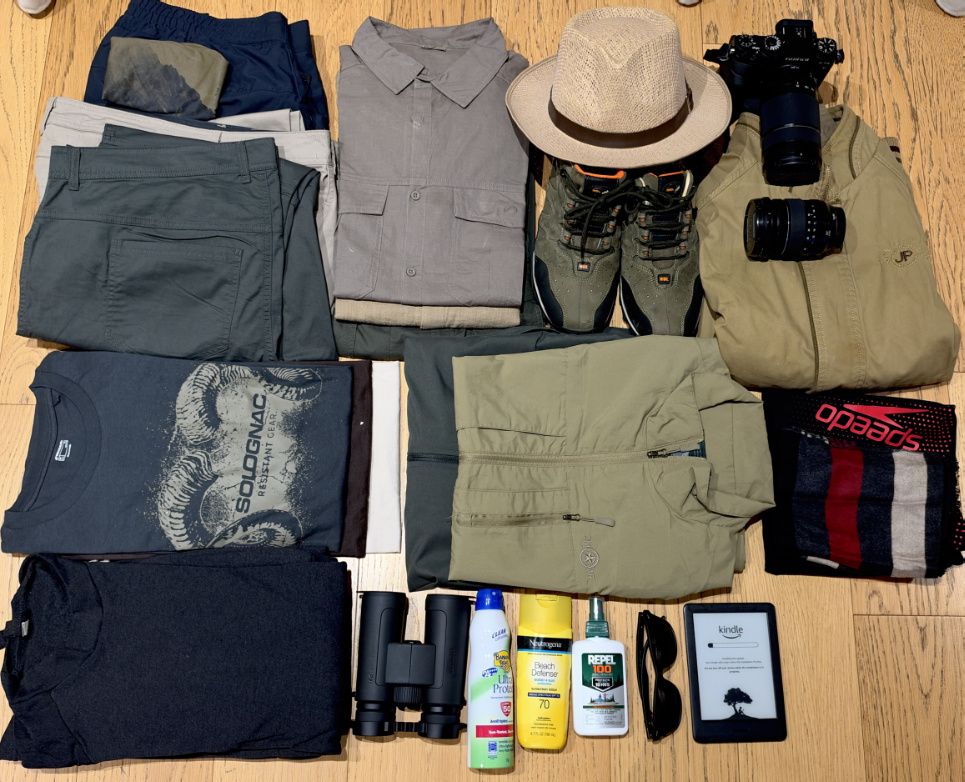
Packing is usually a thirty-minute affair for me. But this time was different. Preparing for the Mara became part of the excitement and, being me, an exercise in eliminating every possible source of regret.
The 70–300mm for my Fuji X-T4 was vital. I wanted to capture a Mara moment without turning every lion into a distant dot. A vertical battery grip and two UHS-II cards followed, because battery anxiety, limited storage, and my enthusiasm for continuous shooting seemed best dealt with now than live through a preventable crisis.
I added a Carl Zeiss lens-cleaning kit for the dust and a Vanguard bag to keep everything organised. Then came the Nikon 8x42 binoculars because occasionally I intended to look at an animal without immediately trying to photograph it. This was the theory, at least.
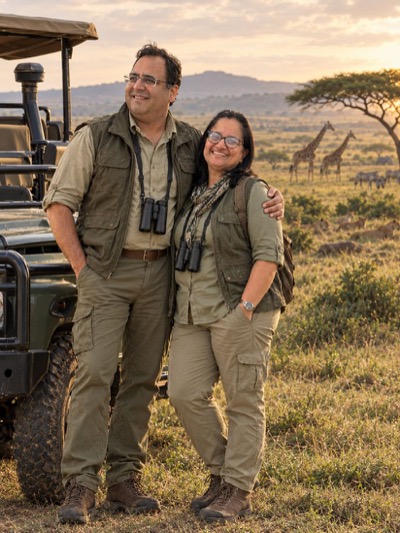
I uploaded one of my pictures to ChatGPT and asked it to imagine us in Mara with the right outfit.
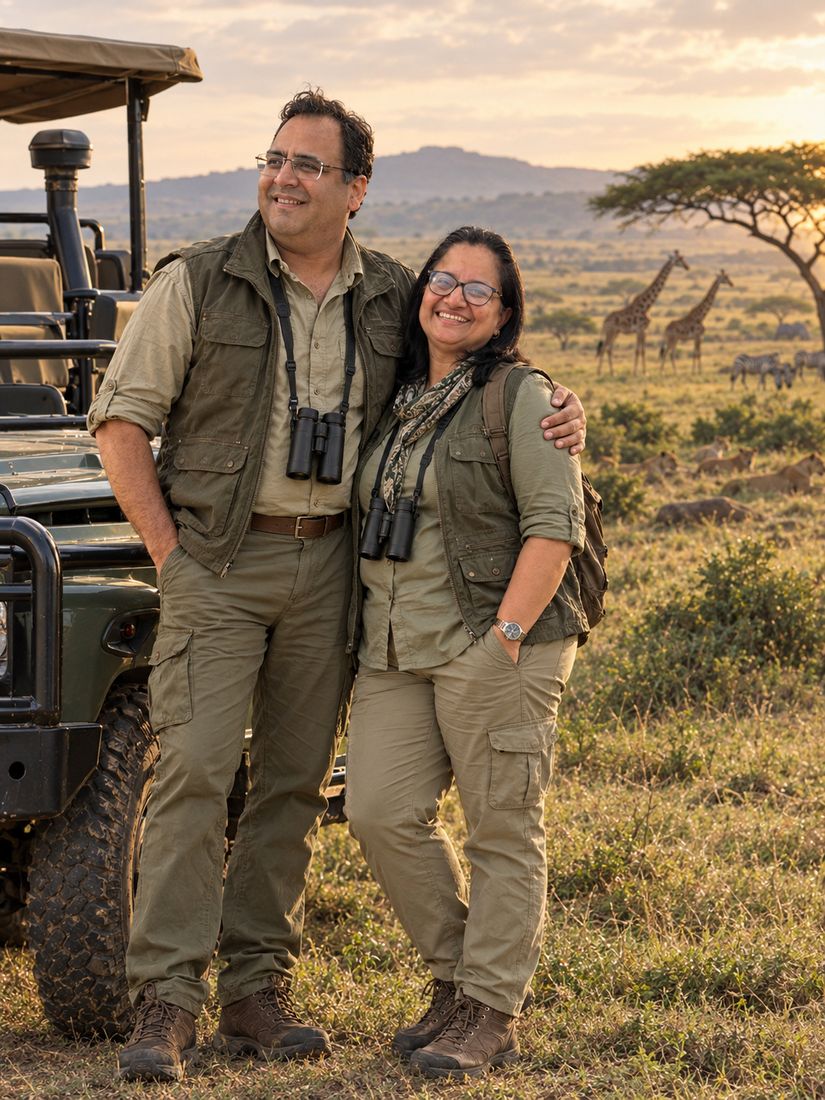
What followed was a shopping expedition that was almost a safari in itself. I prowled through Decathlon and Westside for ranger-style clothes, found a fishing jacket from USPA with enough pockets to suggest I was preparing for an expedition rather than a holiday, and added UV-protection power shades for maximum explorer credibility.
Woodland all-weather shoes completed the look. At that point, I was beginning to resemble the picture generated by ChatGPT.
Then came the serious business. 98% DEET insect repellent to discourage mosquitoes carrying Zika, dengue, malaria or chikungunya, and SPF 70 Banana Boat spray to defend against the harsh equatorial sun. The goal was to look like the picture and to survive like the picture’s sensible understudy.
Every possible nuisance had a countermeasure. I was beginning to suspect that, I could make the African wilderness feel administratively manageable.
I realised that this was turning into a small-scale military operation, disguised as a holiday, with only better optic gear and almost no chain of command.
With every item in the bag, the Mara felt a little closer. The perfectionist in me was satisfied and the traveller in me was impatient to leave. The journey had already begun, I just hadn’t left home yet.
Before the journeyChapter 2 of 26
The Self In My Photographs
I sometimes wonder why I care so much about taking photographs when I travel. After all, I am there for the experience. Why should I be thinking about capturing it when I could simply be living it?
Actually it begins even before the journey. Imagining the photographs I might take, the moments I might encounter, adds another layer of excitement to the anticipation. In a way, I begin experiencing the place before I have even arrived.
And once I am there, the camera makes me look more closely. I start noticing the way the light falls, the subtle variations in colour, an expression, a shadow, or a fleeting moment that might otherwise pass unnoticed. The search for a photograph often makes me more present, not less.
Then comes the pleasure of looking back. A photograph can transport me instantly to a place I visited years ago. Not just to its landscape or its people, but to the feeling of standing there, experiencing it for the first time. For a moment, the distance between then and now seems to disappear.
There is also the joy of sharing. A photograph allows me to bring a little of that experience to people who were not there. And when I tell them the story behind the image, I find myself reliving the moment all over again. The experience acquires a second life, sometimes years after it happened.
But perhaps the most personal reason lies in what happens when I look through my photographs over time. I don’t just see the places I have visited. I see different versions of myself — the person I was at a particular age, what excited me, what caught my attention, what I found beautiful, and what mattered to me then.
The photographs become a kind of autobiography, written without words. They preserve not only the world as I saw it, but also the person I was when I saw it.
Maybe that is why I take photographs. I am not only trying to hold on to a moment. I am trying to preserve a little of who I was when I lived it.
Before the journeyChapter 3 of 26
The Heaviest Baggage
I realised that every journey begins twice. Once, when you start planning and preparing for the trip. And once when your bags are packed and you get the message from the drive - “I have arrived”.
Mara had existed for me only in photographs. I wondered what the real thing would be like. Would it be as beautiful as the photographs? Would the Mara be overwhelming, or would it somehow feel familiar?
I had my bags packed with everything essential for the travel. But I also carried an expectation. Perhaps that was the heaviest thing in my luggage.
Before the journeyChapter 4 of 26
Adventure Begins When We Stop Resisting
My flight was delayed by four hours. The news came when I was on my way to Mumbai in a train. Strangely, I felt no anxiety. It failed to unsettle me. Somewhere between choosing the Mara, reading about it and preparing for the unexpected, I had entered a different state of mind - more patient, more open and ready to accept the journey as it came.
Perhaps that was Mara’s first lesson even before I had landed. We don’t control what happens. Flights get cancelled, plans change and journeys take longer than expected. The adventure begins when we stop resisting the unexpected.
I was ready now for the deeper journey into the landscapes that had filled my childhood screen, and to discover what they had been trying to teach me all along.
Before the journeyChapter 5 of 26
An Evening To Remember
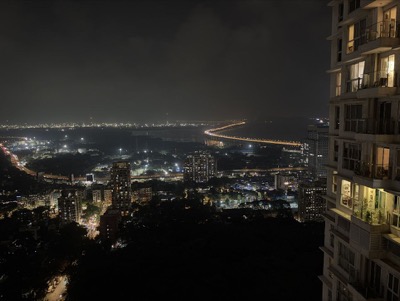
We went at Anshuman’s new apartment at Crescent Bay in Parel, and it turned out to be a great decision. The view from the 27th floor apartment was fantastic. The anti-gravity bed and loungers made it incredibly comfortable to just sink in and relax. With YouTube music playing, some wine and a bottle of Kadamba, the evening quickly turned into a little party with some incredible dishes prepared by Sahil.
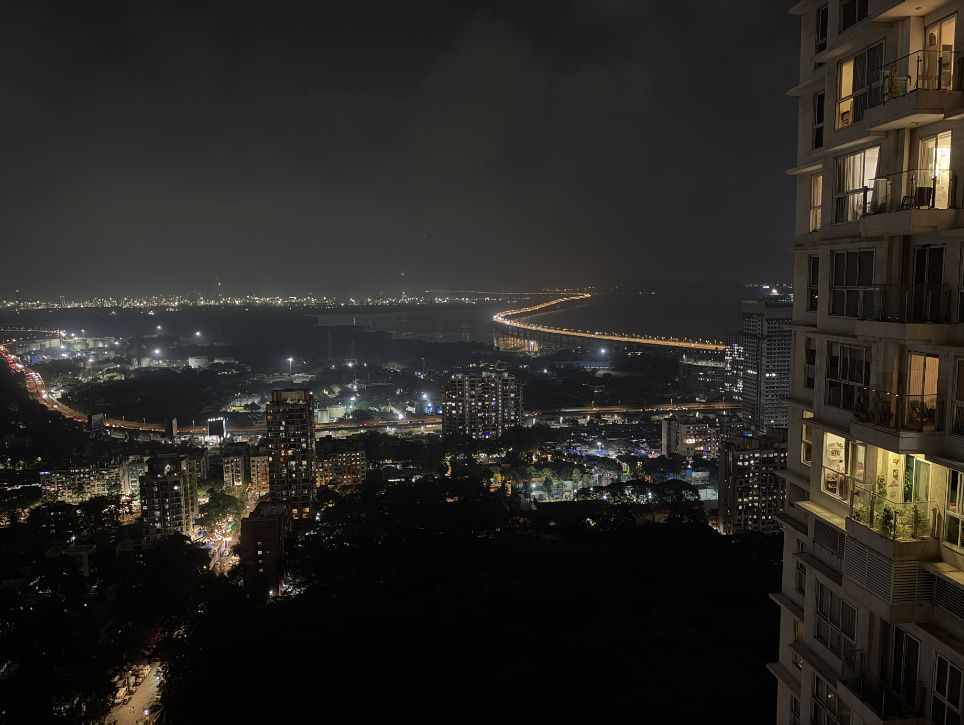
Good music, good food, a great view friends and family - it was one of those simple evenings that you don’t really plan, but end up remembering forever.
Lake NaivashaChapter 6 of 26
First Sight of Africa
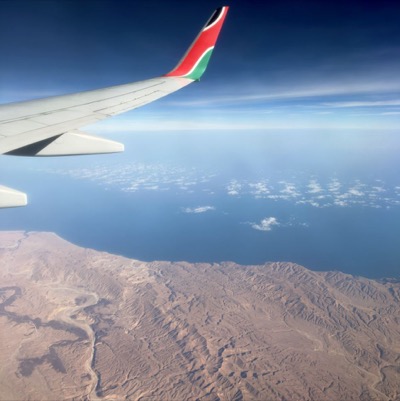
My sight of the continent was a landscape with great expanses of ochre and red earth. It ran all the way to the horizon, cut through by hundreds of dry riverbeds and winding streams.
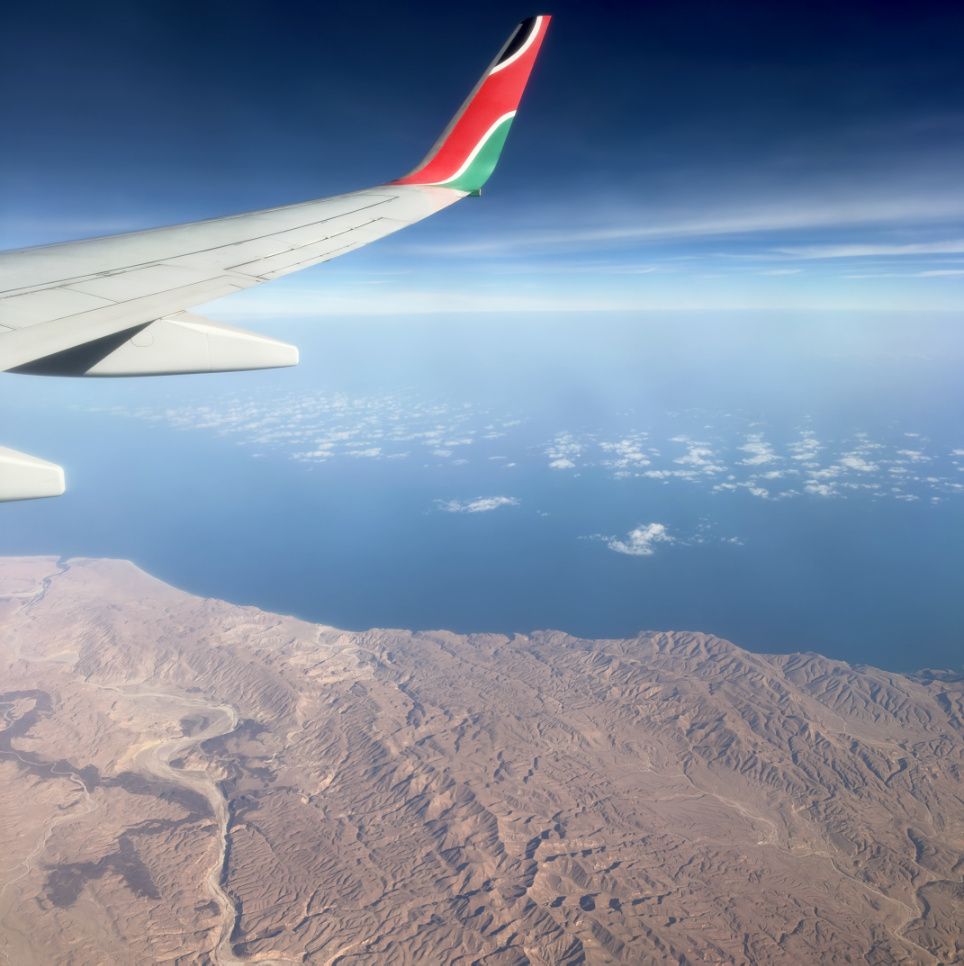
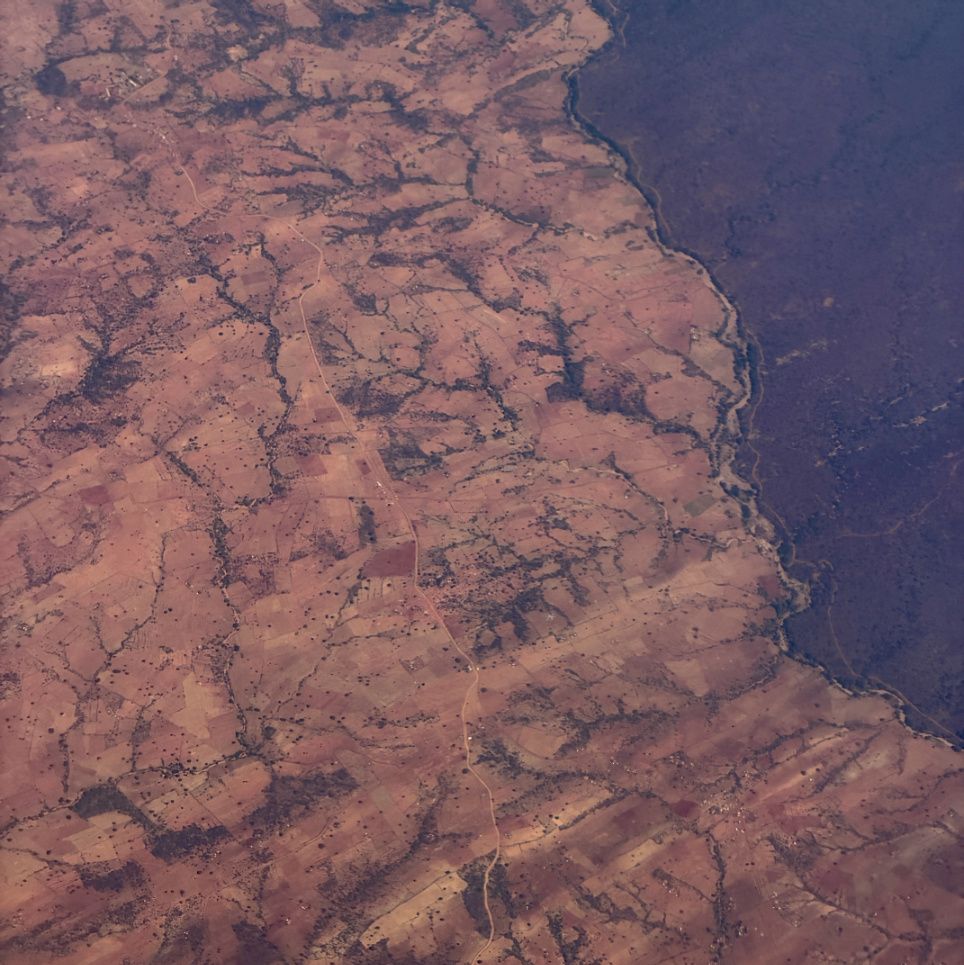
For a moment, it looked like another planet. Mars, perhaps. Except this was alive. The colour of the earth - that deep, rusty red made me wonder about how many millions of years had wind, rain, fire and sun taken to shape this land? What is this land holding beneath its silence?
Soon the clouds began to gather. White formations floated across the deep blue sky looking like cotton fields. From the plane, it almost seemed as if the landscape was breathing.
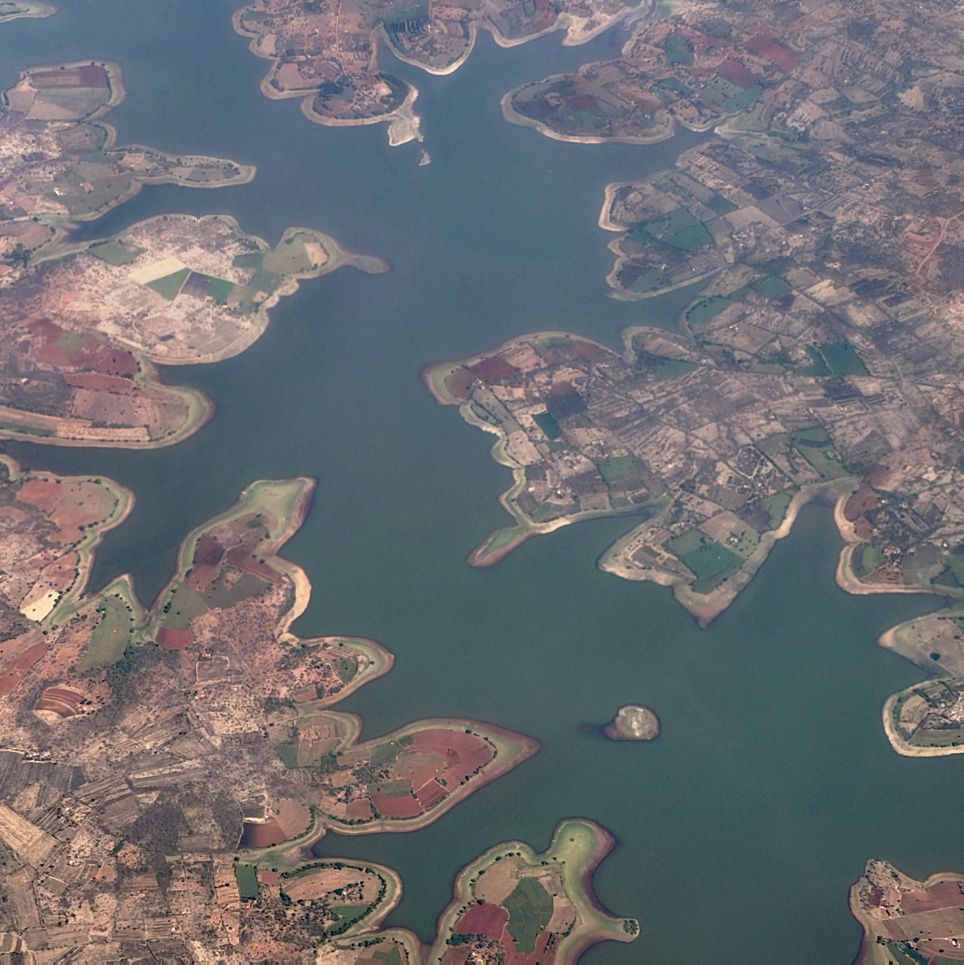
I have learnt that what appears empty is not necessarily lifeless. Sometimes it is simply keeping its life out of sight, waiting for you to come closer, look longer, and learn how much more there is beneath the surface.
Lake NaivashaChapter 7 of 26
A Man, His Memories & A Song
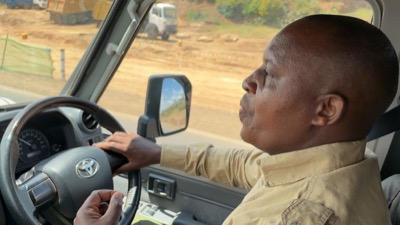
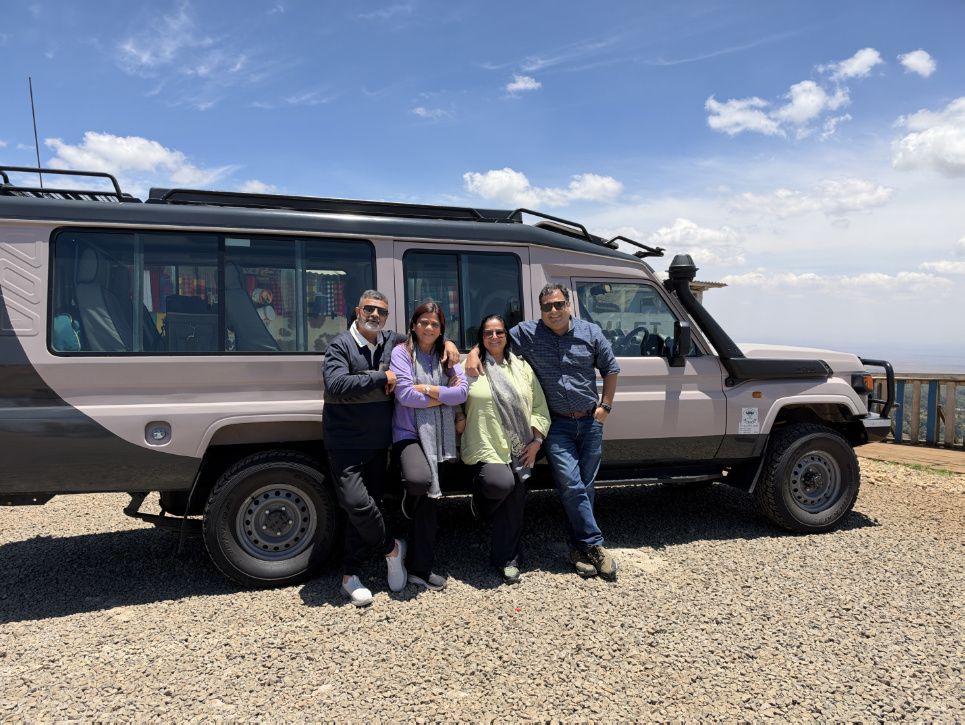
Morgan was waiting for us at the far end of the aerobridge with a warm welcome, and within minutes we were in George’s Land Cruiser cruising through the city towards Naivasha. The vehicle was barely a year old - spacious, comfortable and built for the long and rough tracks that lay ahead.
George, 49, would be our guide and driver for the next four days. There was something immediately reassuring about him. He was friendly, relaxed, professional and very familiar with the land. As we settled into our seats, the road opened ahead of us, and so did the first conversations of our journey.
George spoke warmly about his family. He has four children - two sons named Azra&Mark, and two daughters whose names I unfortunately did not catch. His wife is an art teacher. His work keeps him away from home frequently as he does around three safaris a month.
As the kilometres passed, the conversation became more personal. He told us about Malaika, his first girlfriend, who had gone to America and never returned. They still speak occasionally.
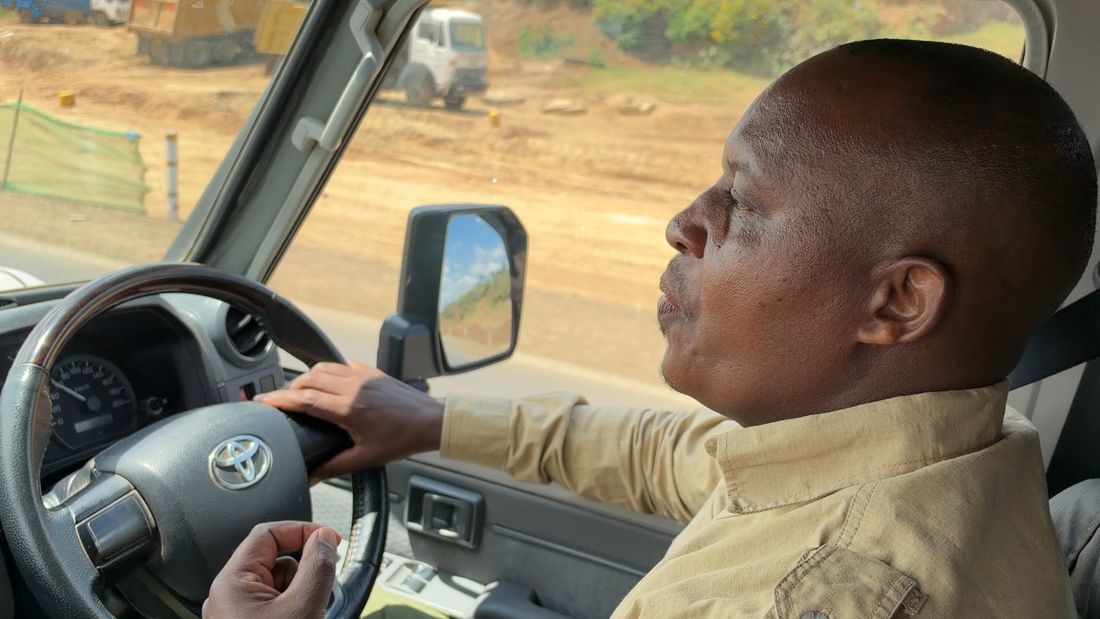
Then, almost unexpectedly, George began to sing “Malaika.” The old Swahili song, with its feeling of love and longing, seemed to carry a story of its own. Our journey to Naivasha had begun with a man, his memories and a song from his past.
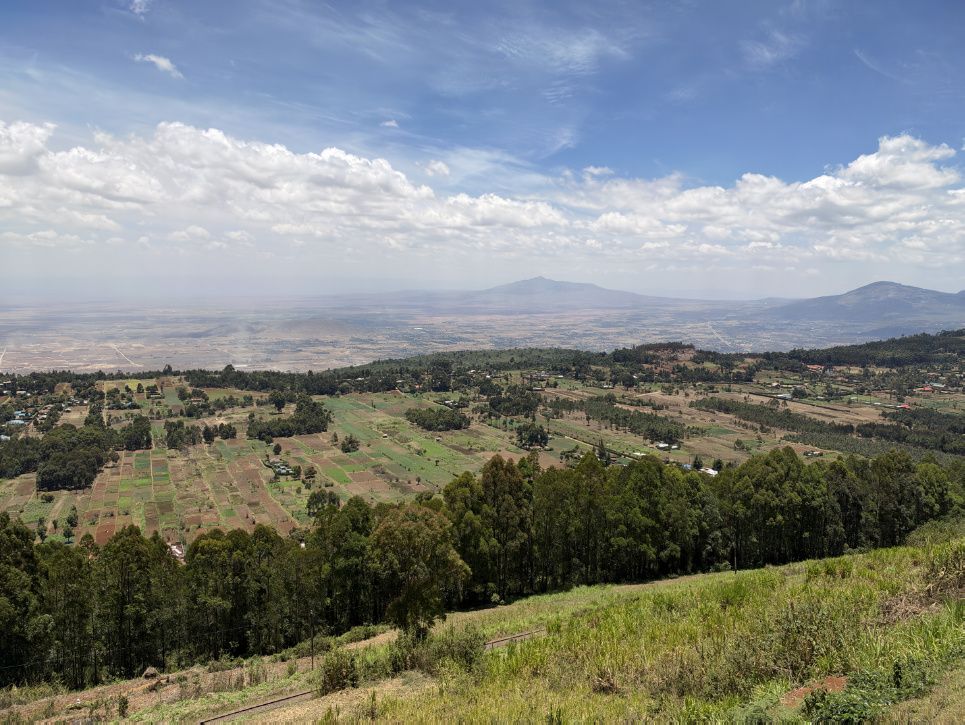
On our way from Nairobi to Naivasha, we stopped at the Great Rift Valley viewpoint. I had never seen a volcanic crater so vast. It was fascinating to stand there and take in the sheer scale of this geological wonder.
I also found a little curio shop and bought myself a Rungu, a traditional Maasai wooden club. It is a symbol of authority, leadership and status among the Maasai. The traditional Rungu has a fairly natural, rustic look. Mine, however, was a rather modern, dressed-up version, decorated with beadwork in the colours of the Kenyan flag. A little more tourist-friendly!
Lake NaivashaChapter 8 of 26
Sopa Resort, Lake Naivasha
By the time we reached Sopa Resort at Lake Naivasha the sky had turned overcast and rain was expected, so our planned boat ride to Crescent Island was cancelled. At first, it felt like a disappointment. But nature had other plans for us.
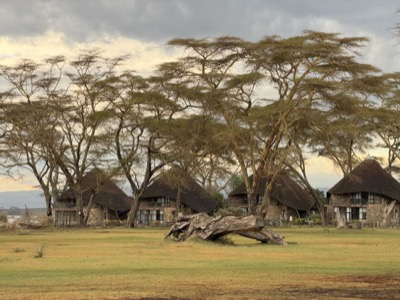
The rooms at Sopa seem to rise almost organically from the landscape. Round, two-storey cottages of warm brick and stone sit beneath enormous, sweeping conical thatched roofs, their balconies and terraces tucked into the trees. They have the character of traditional African dwellings, yet inside and around them is every comfort of a luxurious resort.
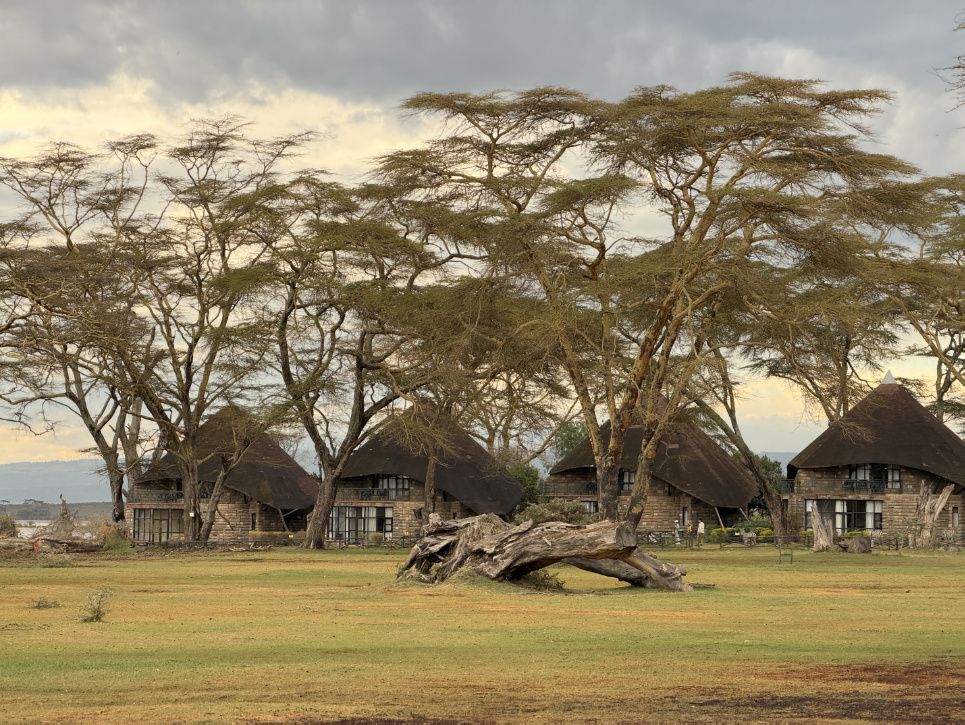
The gardens stretch naturally around the cottages, and animals wander through them as though the resort belongs to them.
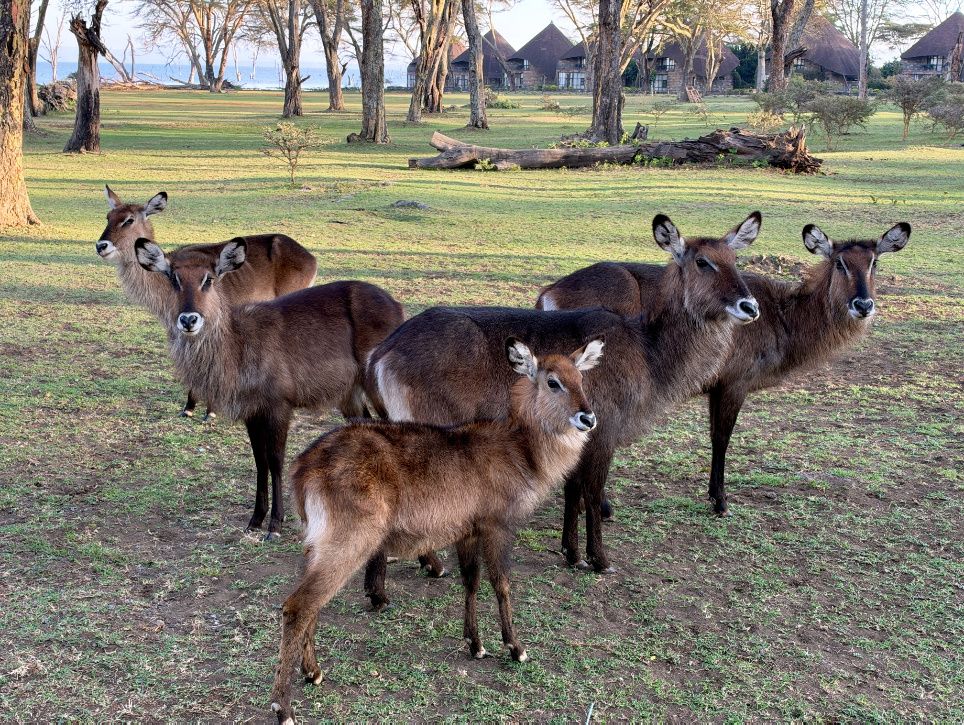
That afternoon, a fine rain drifted across the gardens. The air smelled of wet grass and damp earth. From beneath the shelter of the terrace, we watched zebras and deer graze and play just beyond us, their coats glistening as they moved through the showers.
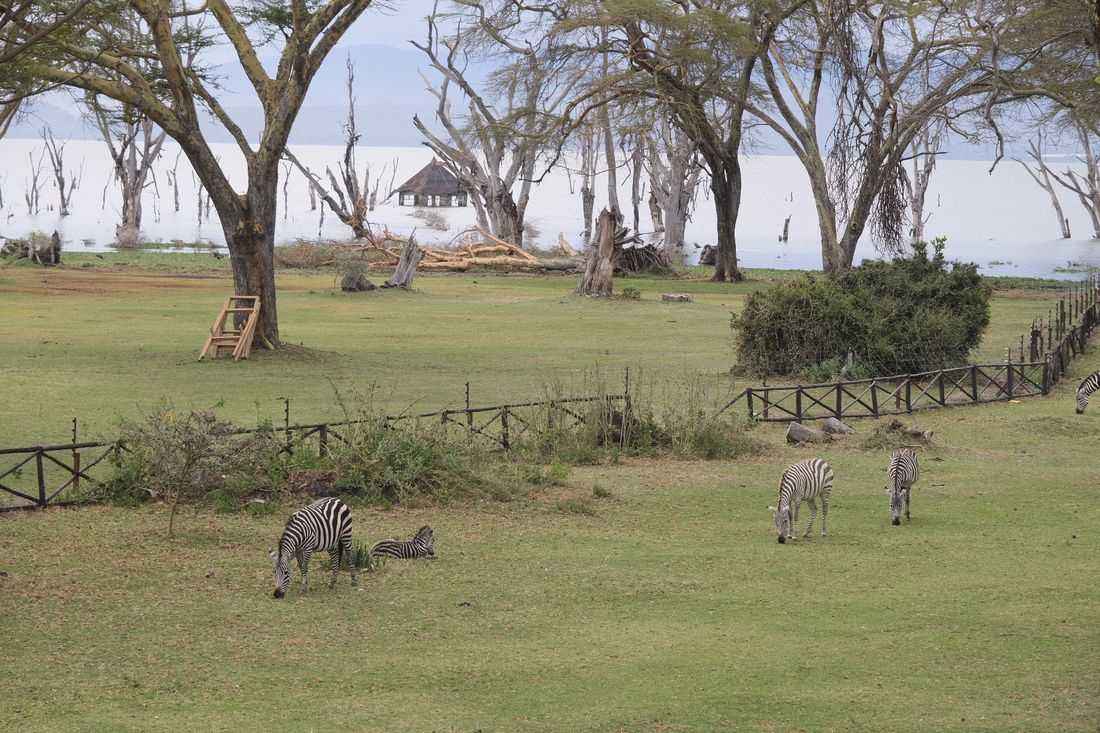
I took a leisurely walk towards the lake, stopping every now and then to watch the many birds around us. The sky was still heavy with clouds when, almost imperceptibly, it began to change. And then the sun broke through.
Slender shafts of gold pierced the dark clouds, while the horizon turned amber and the edges of the clouds glowed like molten silver. The lake caught the last rays, the trees cast long shadows, and the entire landscape seemed to pause for those few fleeting minutes.
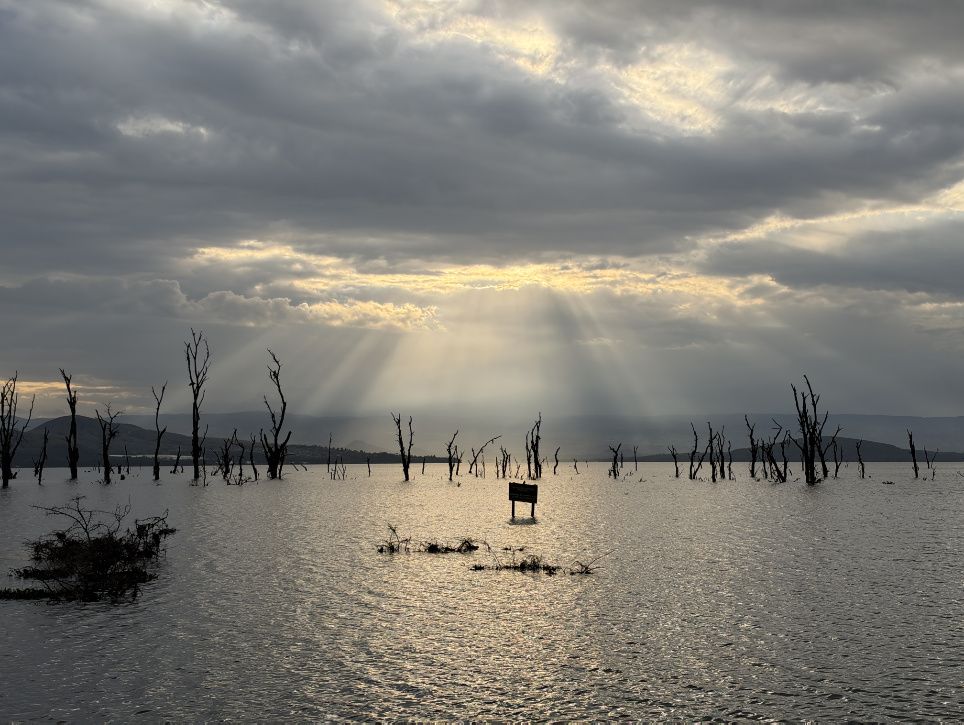
It felt almost as if the heavens had opened briefly. We simply stood there, mesmerised.
Looking back, perhaps the cancelled boat ride was a blessing in disguise. It reminded me that some of the most beautiful moments on a journey are not the ones we carefully plan, but the ones that simply unfold before us.
Lake NaivashaChapter 9 of 26
Boat To Crescent Island
The waters of Lake Naivasha shimmered in the morning light, and the cool breeze made our morning ride to Crescent Island wonderfully pleasant. Every now and then, a hippo would appear, its head breaking the surface as if to remind us that we were very much in its territory.
We entered what looked like an alley through the lake. A strange, almost mythical passage. Leafless tree stumps rose straight out of the water, their dark reflections stretching downwards and creating what looked like an enchanted forest as the boat zig zagged through the maze.
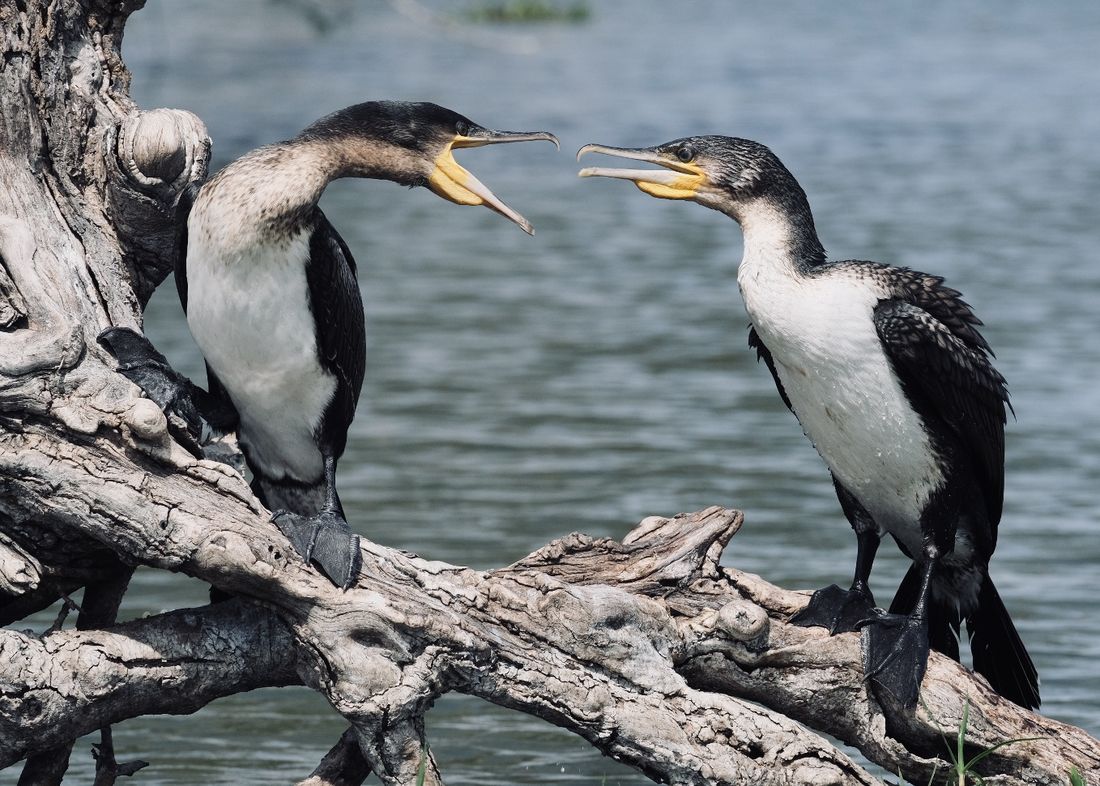
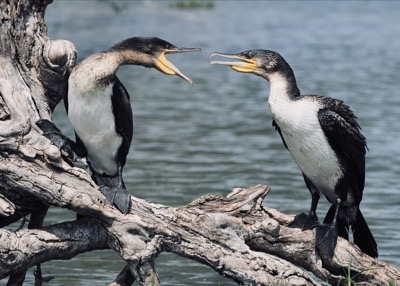
The silence was shattered by an astonishingly high-decibel chorus of chirping, calling and squawking, especially when the larger birds were busy feeding their young. Thousands of them seemed to be everywhere—storks, ducks, geese, vultures and countless others whose names I didn’t know.
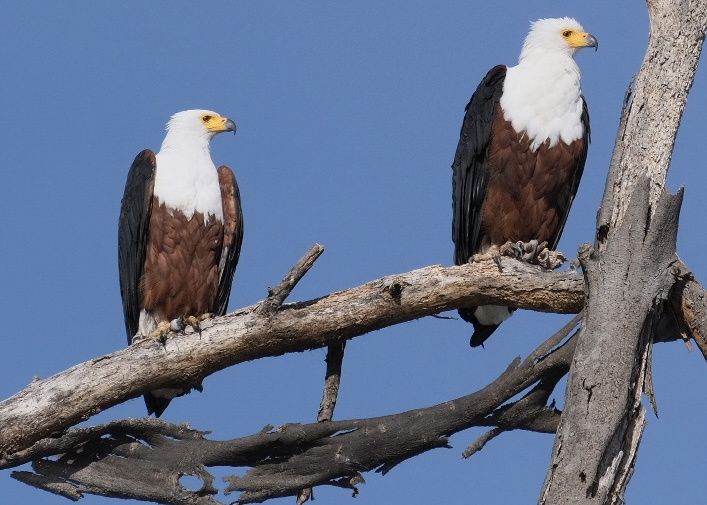
And for me, of course, it was a photographer’s dream. The light, the reflections, the birds and those wonderful tree stumps were just asking to be photographed. I got some particularly interesting shots of the vultures sitting on the stumps. They looked absolutely hilarious—sitting there so majestically, like Saudi sheikhs holding court on their private little thrones!
Lake NaivashaChapter 10 of 26
A Walk Through Jurassic Park
With our beautiful guide Demi leading the way, we set off on a walking safari.
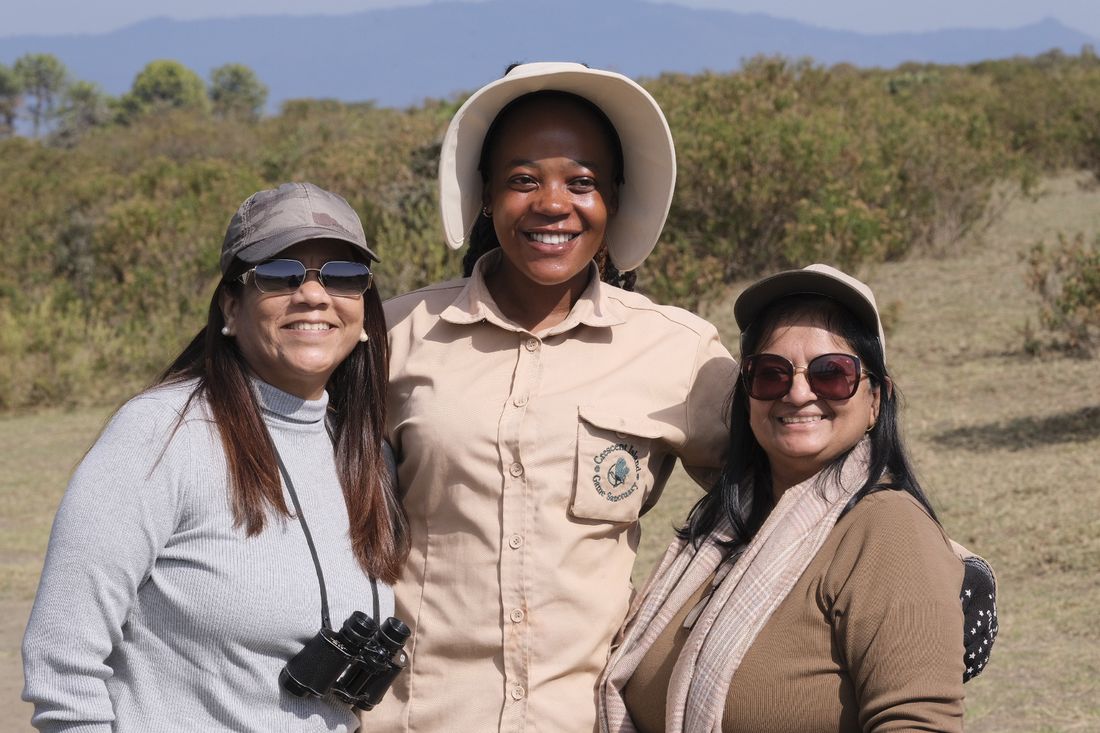
There was something unreal about being on foot, with animals wandering freely around us. No fences, no jeep to hide behind. Just us, the open landscape, and the feeling that we had somehow stepped into Jurassic Park.
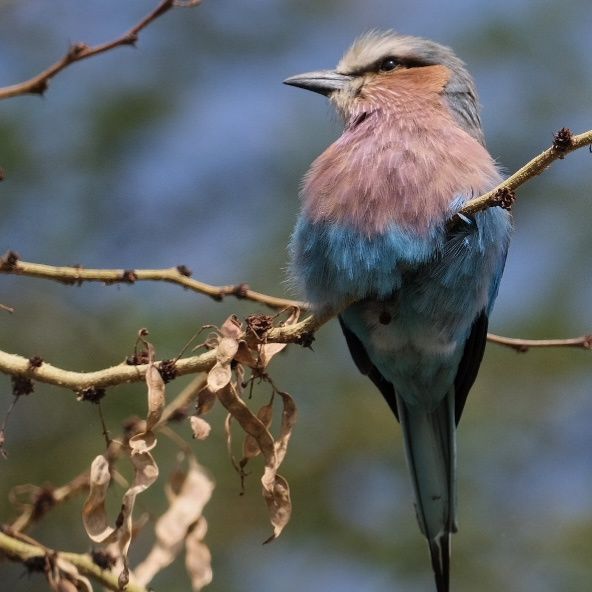
We were greeted by Kenya’s national bird, the lilac-breasted roller, in all its colourful glory, as we followed the trail in search of our first giraffe.
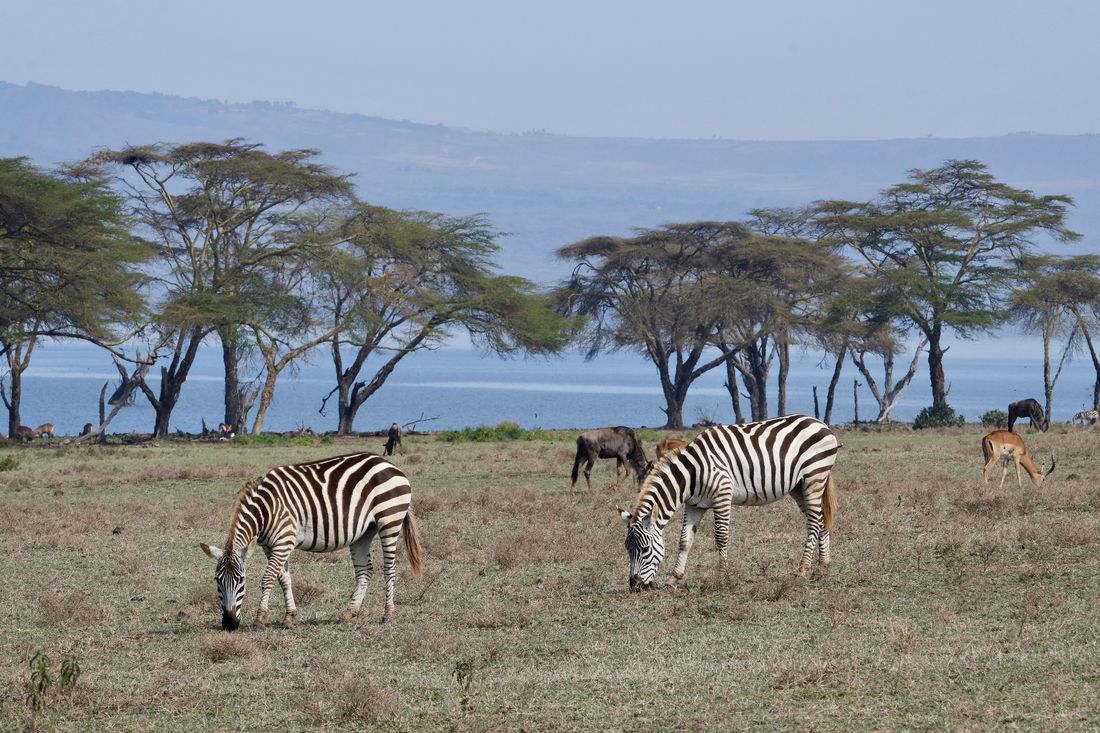
The anticipation was building, but the giraffe remained elusive. We had caught a glimpse of one but it quickly disappeared into the hillside.
Just as we were leaving on the boat, disappointed that we could not see it there it was again, offering us one last glimpse. A little like a farewell wave. It was at the top of the hill, looking down at us with an air of amusement — almost as if it knew we were searching for it and had decided not to cooperate.
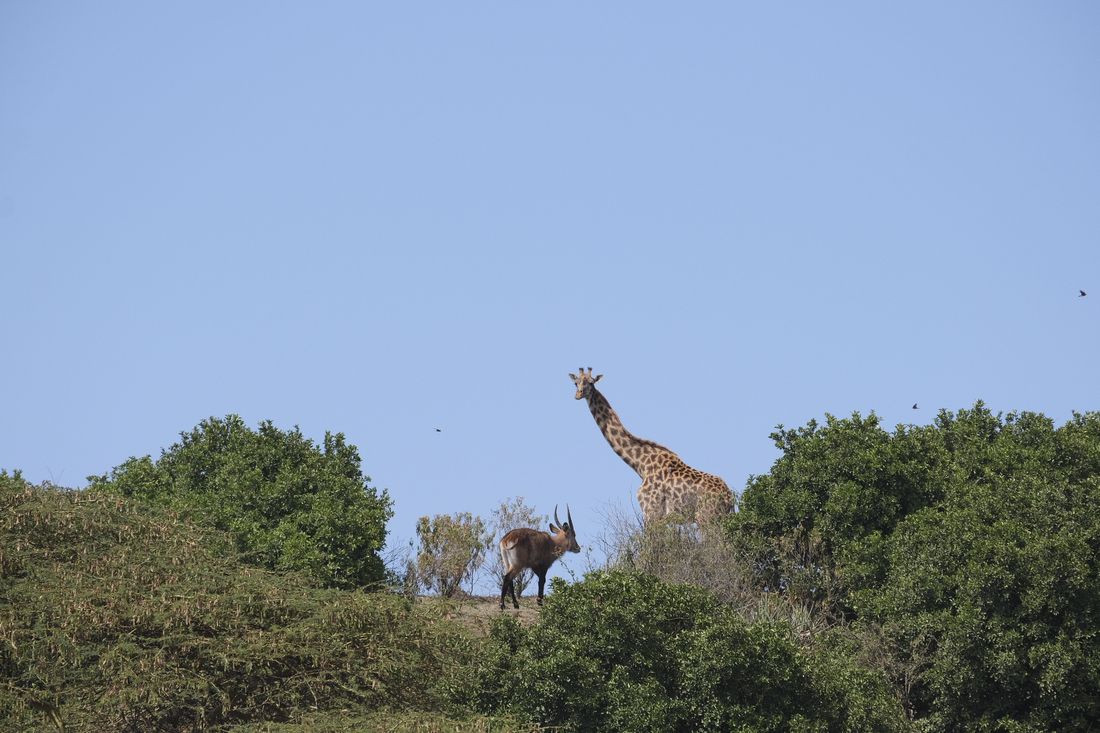
We dropped Demi on the other side of the island. Soon the boat ride was over. It felt as though we had travelled beyond time itself, cruising through a prehistoric world where nature had never quite surrendered to civilisation.
George was waiting for us, and we climbed into our trusty Land Cruiser, ready for the next adventure. But Lake Naivasha wasn’t quite done with us yet! As we drove out of Sopa Resort, there they were — four giraffes right on the road! It was as if Naivasha had saved its best goodbye for the very last moment.
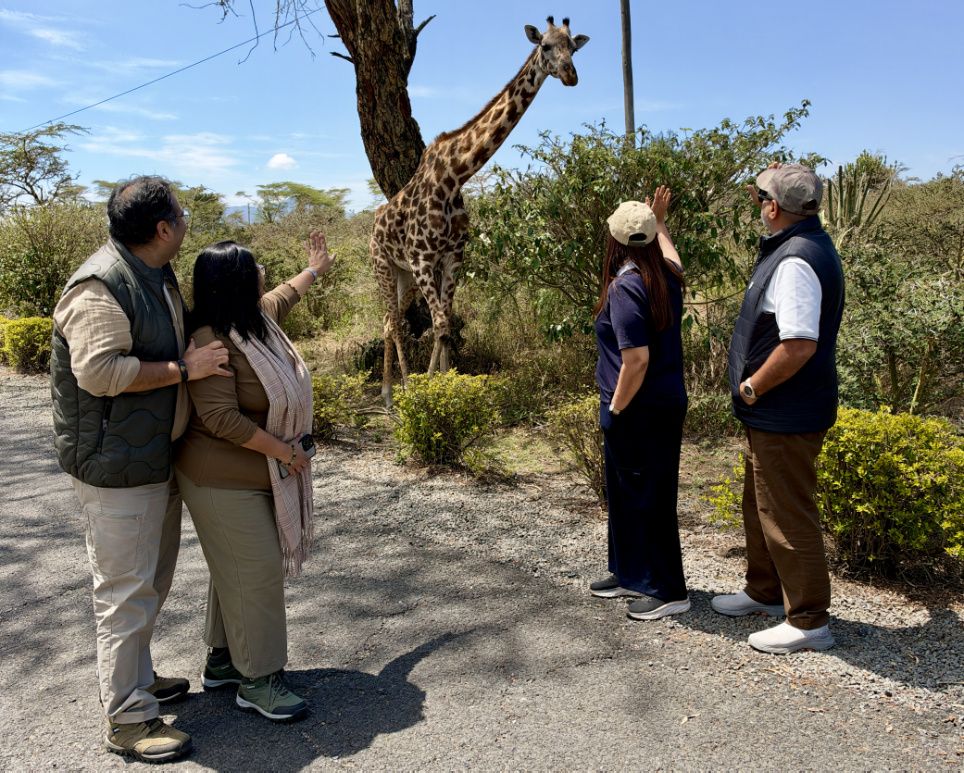
There was so much joy in that unexpected encounter, the kind that makes you forget the clock, the journey ahead, and everything else. George reminded us that we had a five-hour drive to the Great Maasai Mara.
Lake Naivasha had been a little world of its own. But the Mara was calling.
The Maasai MaraChapter 11 of 26
The Landscape
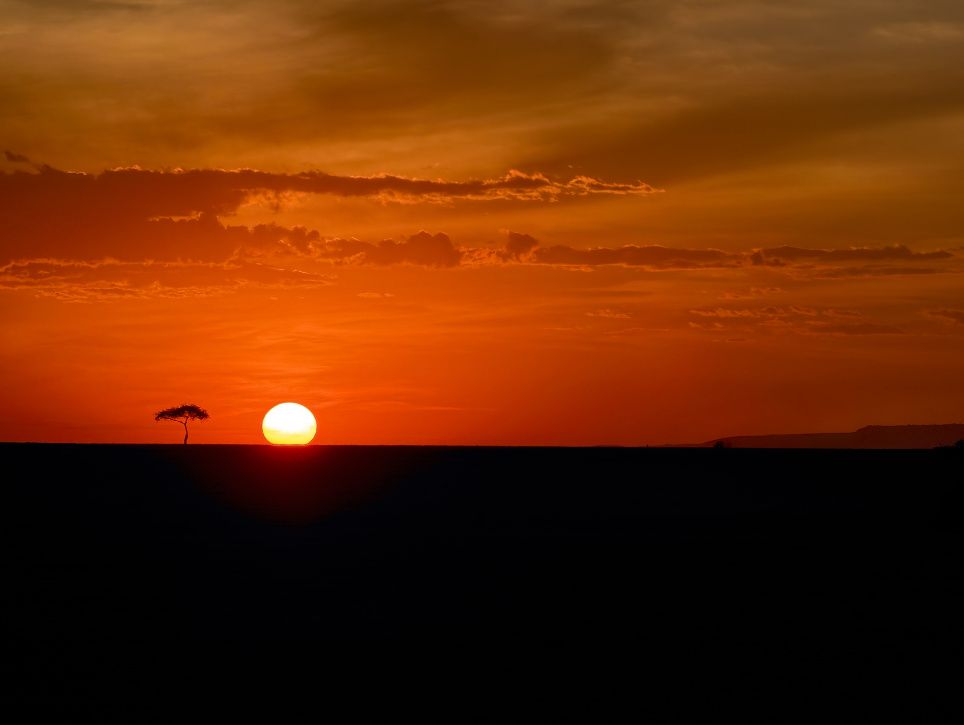
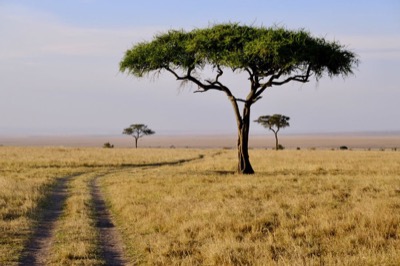
There is one tree that seems to appear in almost every photograph of Africa - a bare trunk, branches spreading like an umbrella, a flat canopy silhouetted against an orange sunset. I had seen it countless times in wildlife documentaries and coffee-table books. But seeing it scattered across the Mara plains was something else altogether.
Some stood alone against the horizon; others dotted the grassland like little islands. I learnt that the name Mara comes from the Maa word for spotted or dappled — a description of the landscape itself, with its scattered trees breaking up the endless grass.
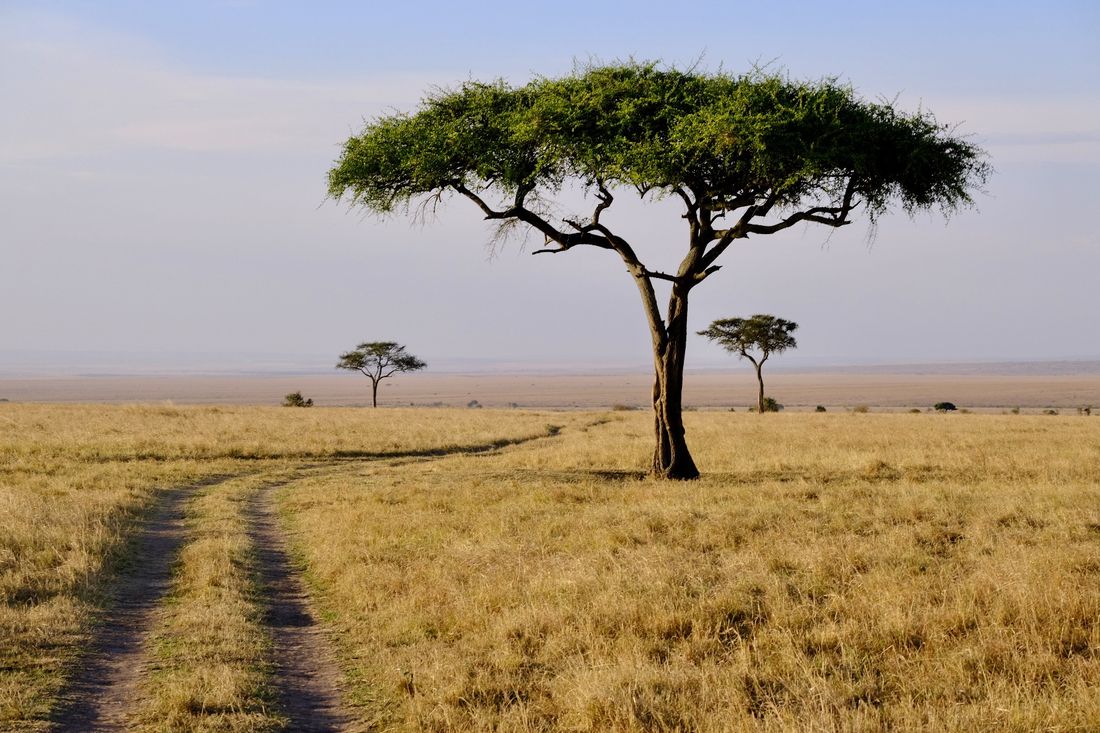
These trees were far more than beautiful props in a wildlife photograph. Giraffes reached for their leaves, elephants tore off it’s branches, and zebras and antelopes rested in their shade through the heat of the day. Their pods have long served as food for livestock and people, while their bark has traditional medicinal uses. They are part of the delicate web of life that sustains the Mara and the communities who call it home.
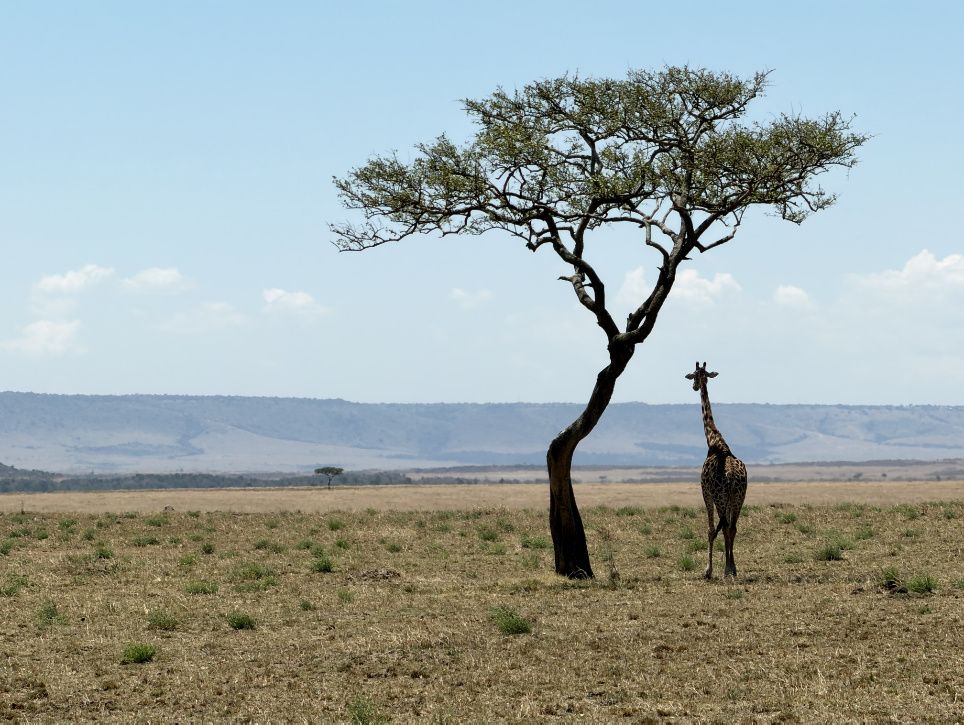
And then there is the magic they offer a visitor. A lone tree framing a giraffe, its branches catching the last light, or its silhouette standing against a fiery sky.
The tree becomes as memorable as the animal you came to see and I found myself photographing these trees more often than wildlife.
The Maasai MaraChapter 12 of 26
Our First Safari
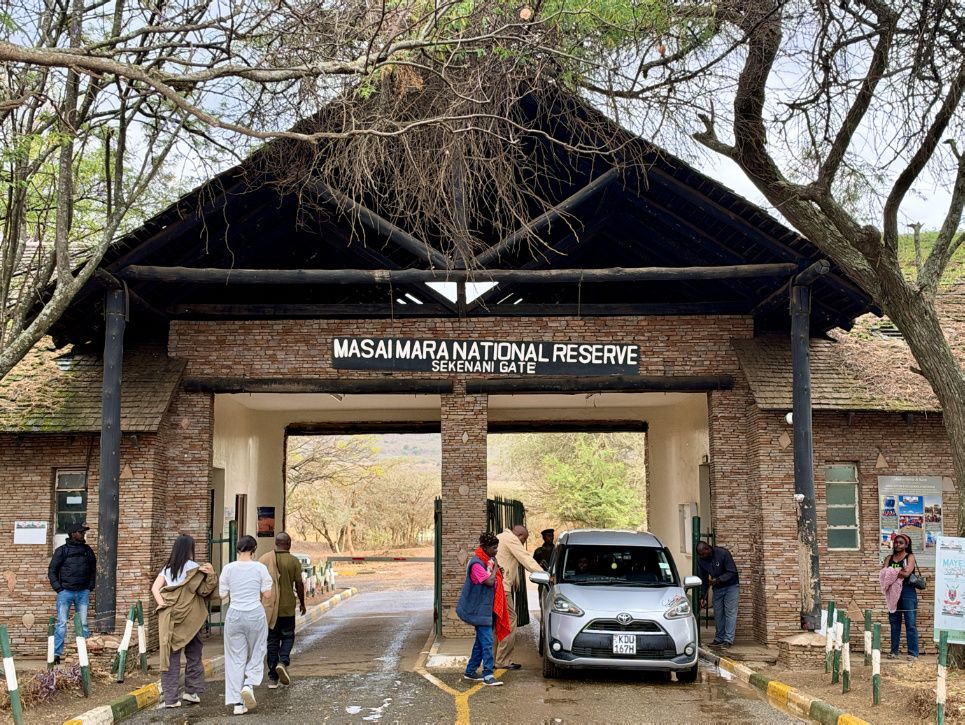
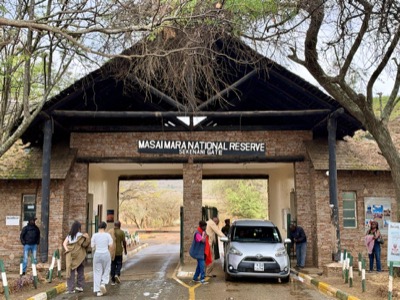
At the Sekenani Gate, we got our first lesson in Masai art of selling souvenirs! A group of Maasai women surrounded our jeep with their colourful crafts. We tried smiling, politely refusing, and pretending to be terribly busy. Nothing worked. Eventually, we surrendered and bought a few keychains. They had clearly done this before; we were amateurs.
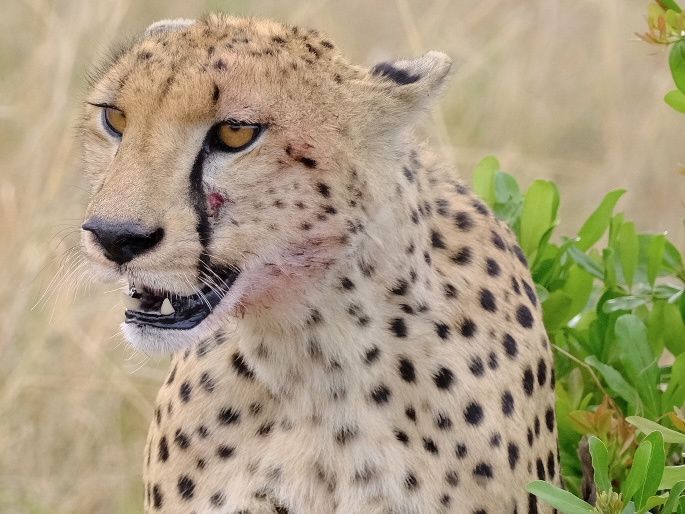
Inside the reserve, a giraffe stood ready to welcome us, followed soon by a young cheetah with a fresh kill.
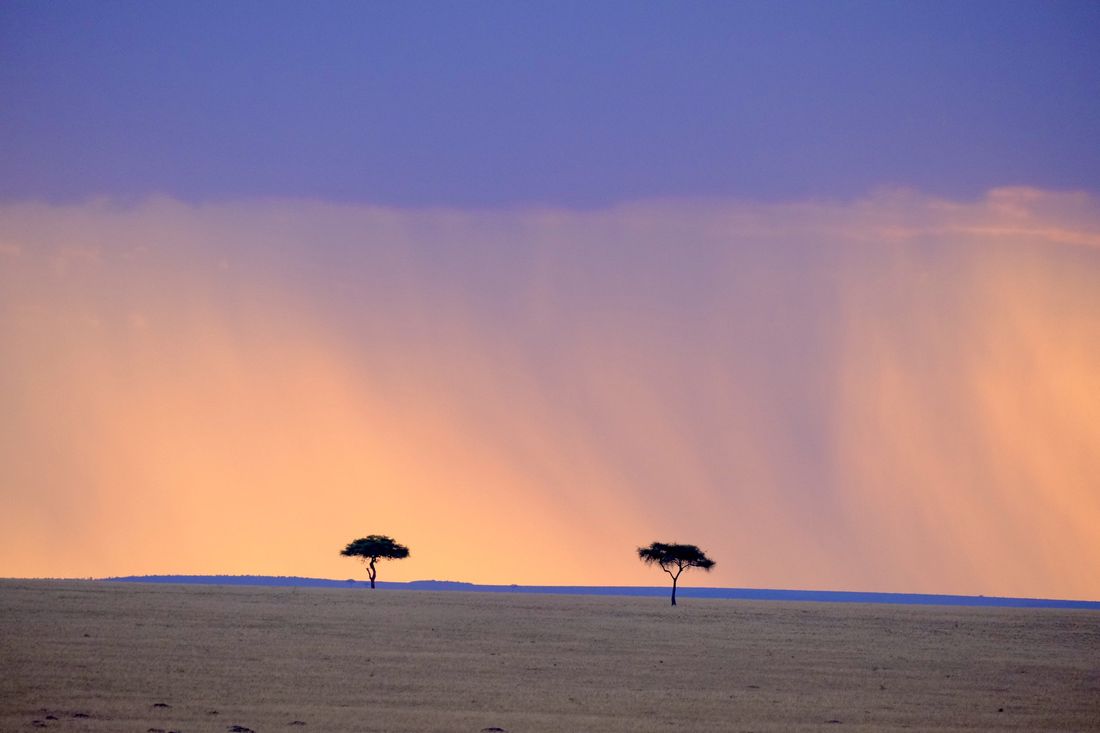
But nothing could have prepared us for what came next. The Mara sunset! I had never seen a sky like this. It was as if nature had opened an entirely new palette of colours, with clouds descending like enormous curtains across the horizon.
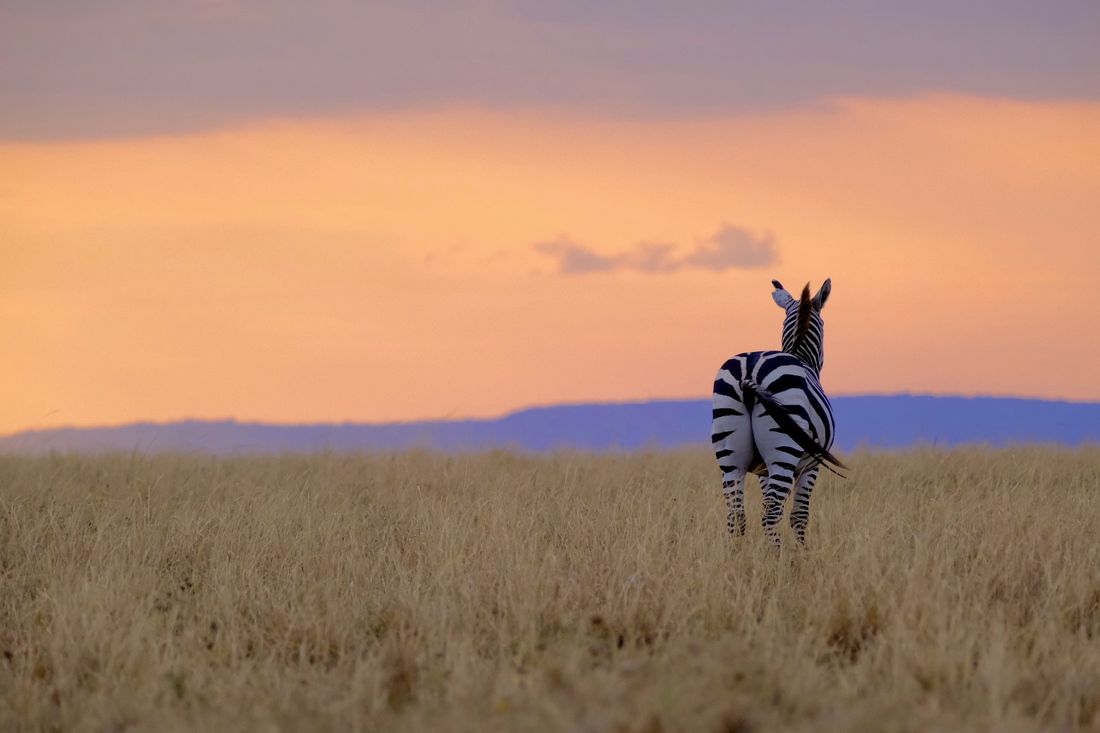
Golden light fell over Zebras and Topis, turning their coats into shimmering, expensive cloaks. Even the grass seemed to glow. For a few precious minutes, the whole savannah looked as though it had been touched by magic.
I kept changing my camera settings, desperately chasing the perfect photograph. Of course, the camera could capture the colours, but how does one photograph a feeling? I wanted to stay forever. Unfortunately, the Mara has rules, and overstaying meant a fine. Nature may be timeless, but park authorities apparently run on a schedule!
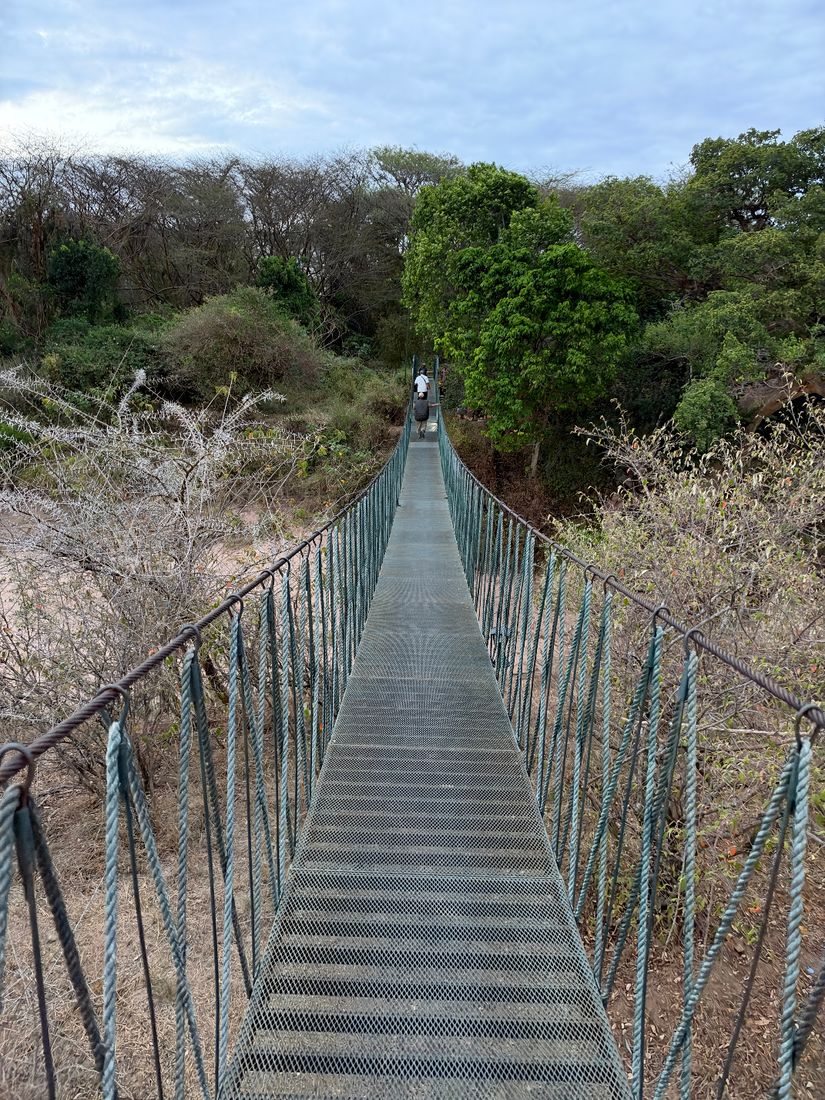
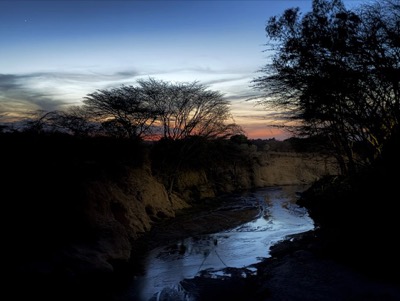
We reached Tipilikwani Camp just in time, crossing a bridge over the Talek River, where crocodiles and hippos lay below. Even after everything we had seen, the excitement refused to wear off.
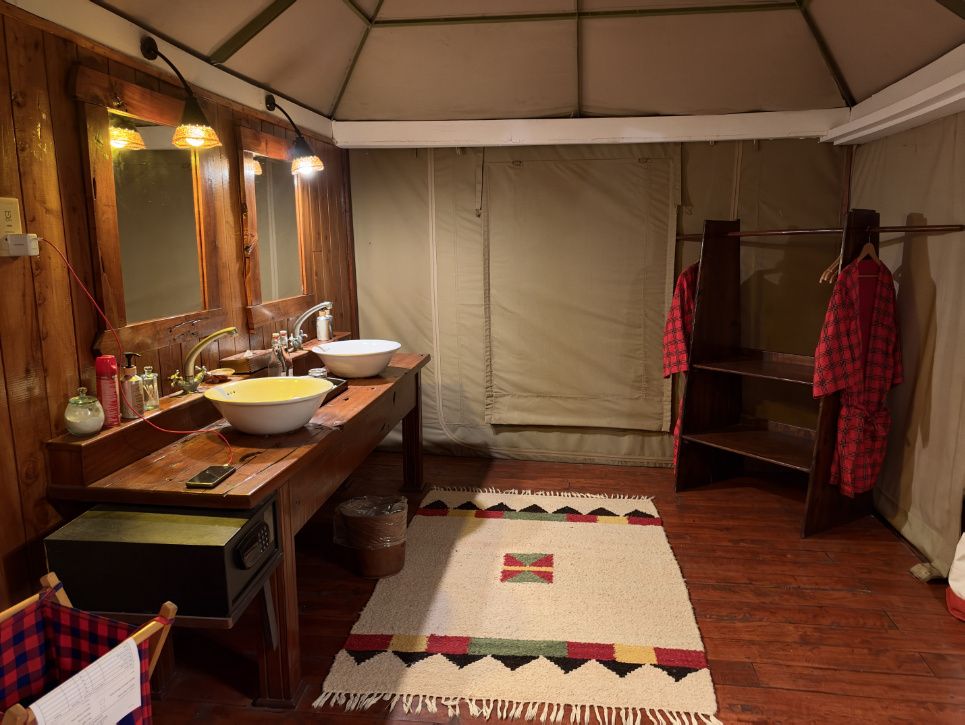
Our rooms had the charm of an old colonial-era retreat, and security guards accompanied us to the dining area. After the introductions I was apparently inducted into the Maasai tribe.
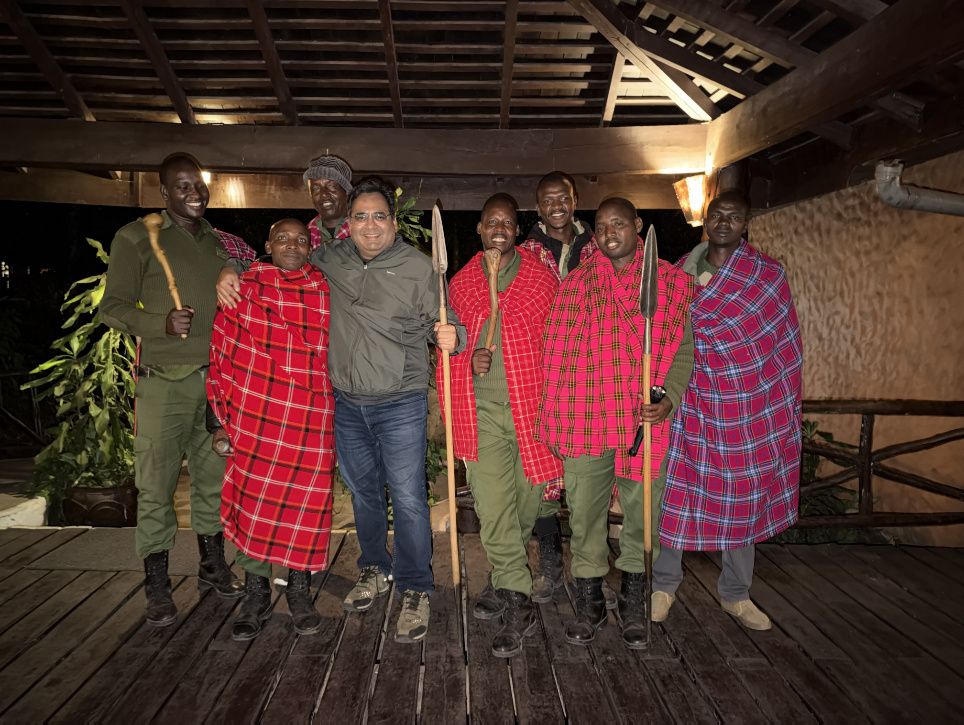
The details of my new membership remained somewhat unclear, but after that sunset and the cheetah, I was happy to accept whatever the Mara had in store for me next.
The Maasai MaraChapter 13 of 26
Fear & Fascination
Night in the Mara is never truly silent.
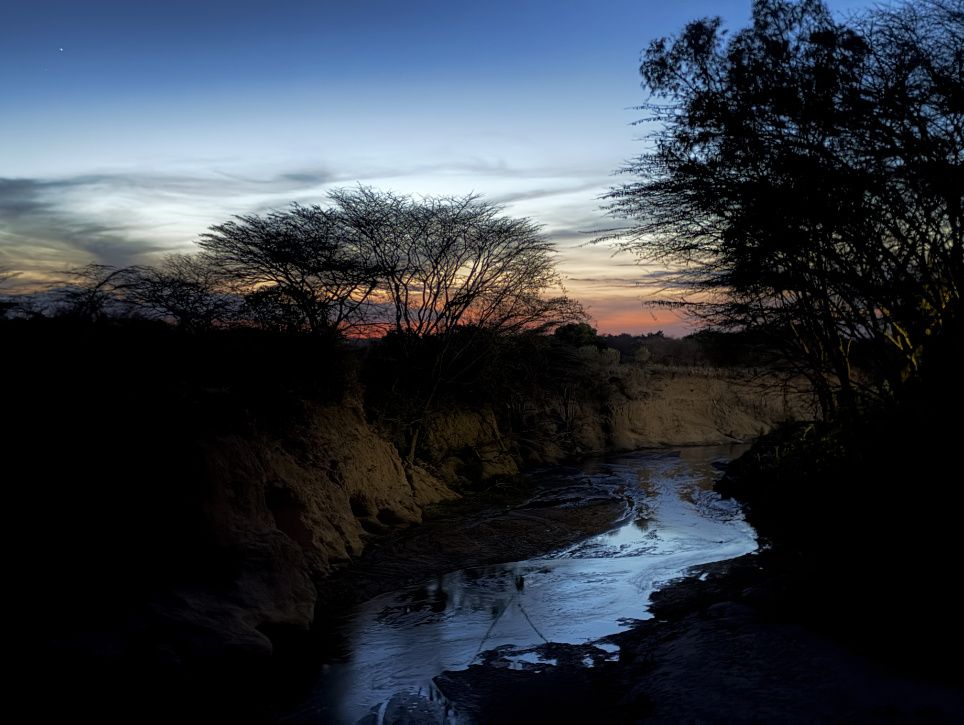
From somewhere beyond the canvas came the hyena’s call. It was an eerie whoop, almost like a human laugh with something sinister hidden in it. It was primitive and just close enough to make the imagination restless.
I lay still. Listening. Caught between fear and fascination as it travelled across the tent. Then, suddenly, it stopped.
The silence that followed was deeper than before. Only then did I realise how tightly I had been holding myself back.
The Maasai MaraChapter 14 of 26
Morning In The Mara
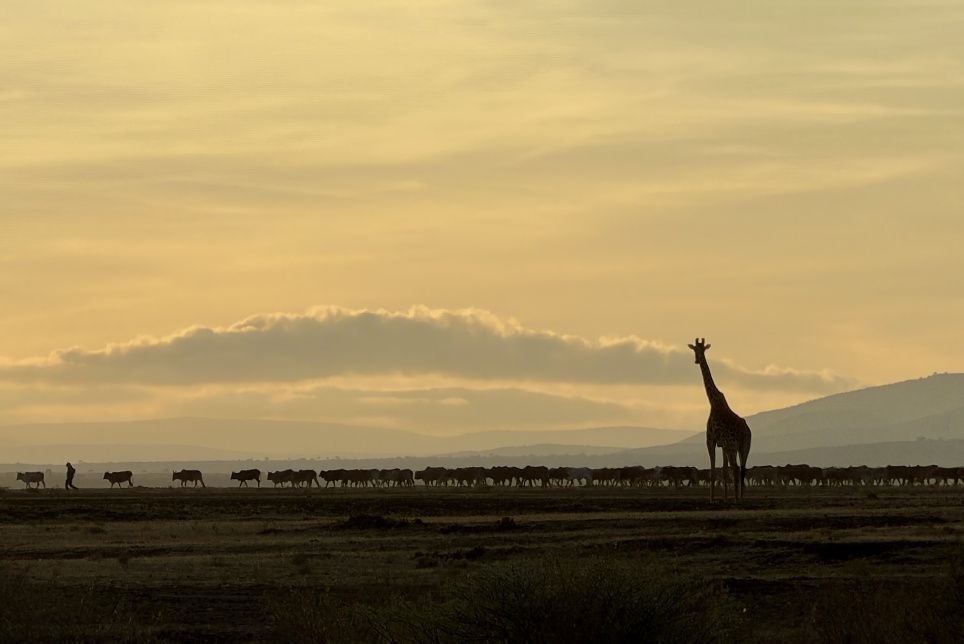
A thousand cattle came home from the savannah at sunrise, guided by just five Maasai herders. Their red shúkà caught the first rays of the sun, each figure glowing against the endless gold.
From a distance, the herd seemed like a living river, flowing across the horizon—slow, silent, unhurried.
For a moment, there was nothing but cattle, sky, earth and five men walking home. A glimpse of life reduced to its simplest rhythm. And somehow, completely at peace.
The Maasai MaraChapter 15 of 26
Everything Is Moving
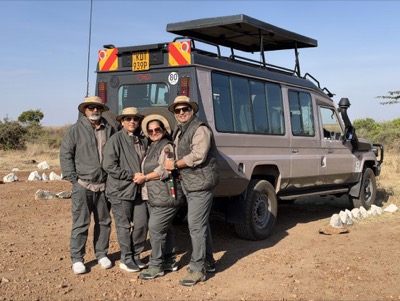
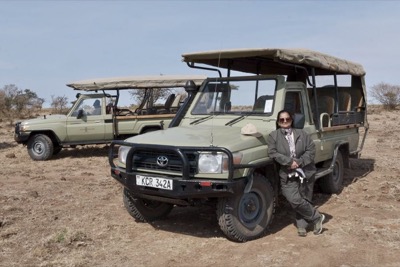
The shopping had clearly worked! By the time we dressed up in our beige shirts, green trousers, green jackets and ranger hats, we no longer looked like tourists visiting the Mara. We looked like rangers who had been entrusted with the responsibility of protecting it! All we needed now was a radio, a few lions to rescue, and perhaps a promotion.
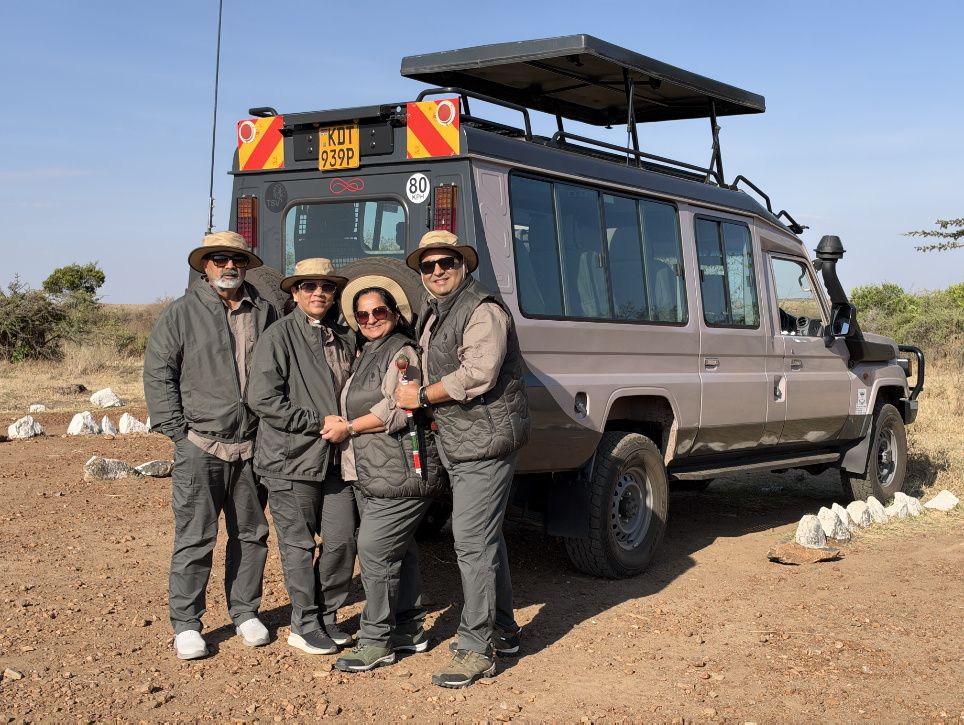
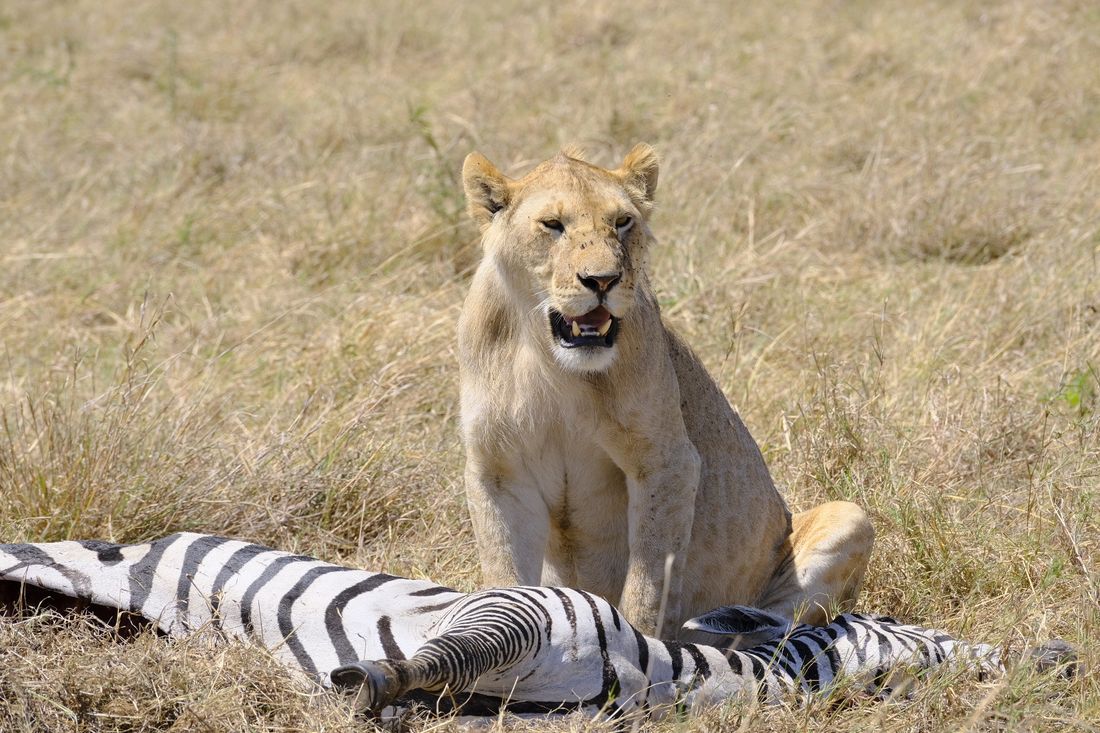
The Mara is a vastness. Long grasslands rolling into distant hills, enormous skies carrying slow-moving clouds, and seemingly endless empty spaces broken only by a lone Umbrella Acacia, a Whistling Thorn or a Balanites tree. And then, almost imperceptibly, the emptiness begins to move. A lion roared in the grass with a fresh kill; We found a leopard hidden in a stream, feeding on a warthog, its spotted body disappearing into the reeds.
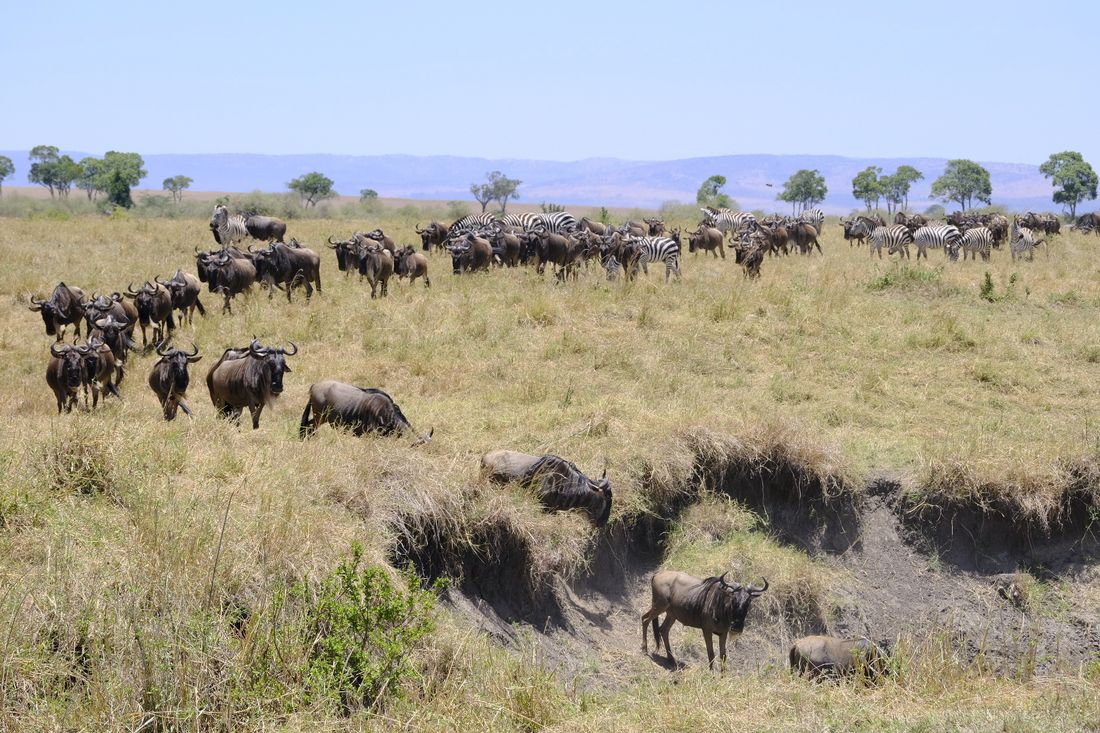
Zebras moved across the plains with hundreds of wildebeests. They stream towards a little watercourse, one animal following another, until the river is alive with thirst. Some wade in and drink; others stand half-submerged, cooling their bodies from the fierce afternoon heat.
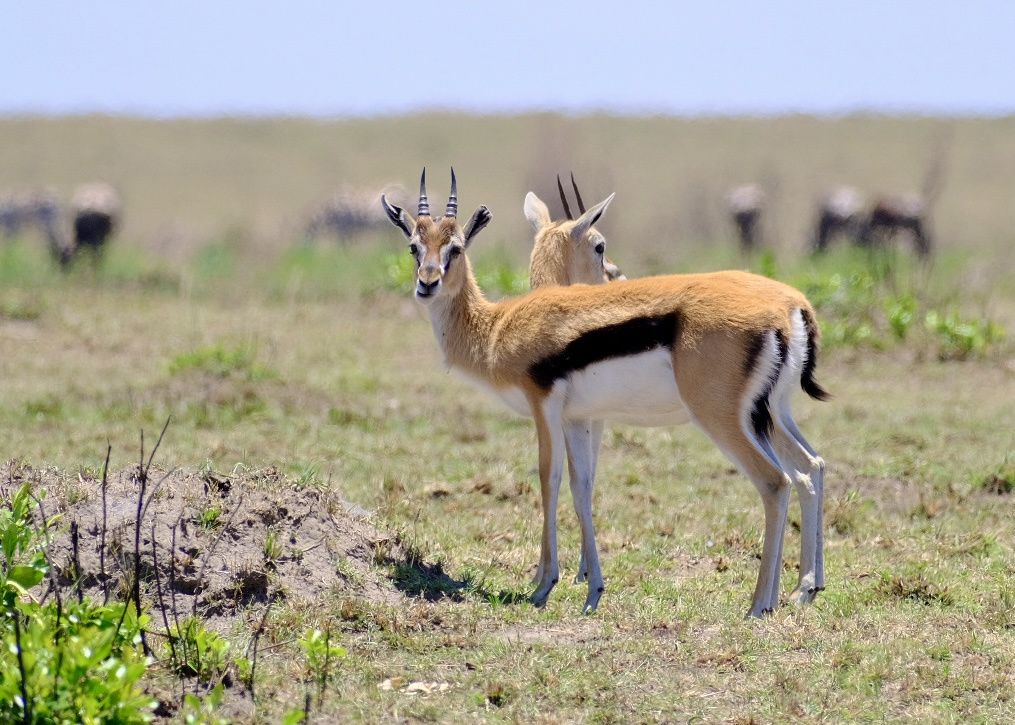
A herd of buffalo gathers heavily together. Topi stand alert on their long legs. Thomson’s gazelles flicker across the grass like little flames. Warthogs trot awkwardly, tails held high.
And then the elephants appear—a family with two tiny babies—swaying slowly across the plain with the unhurried authority of kings.
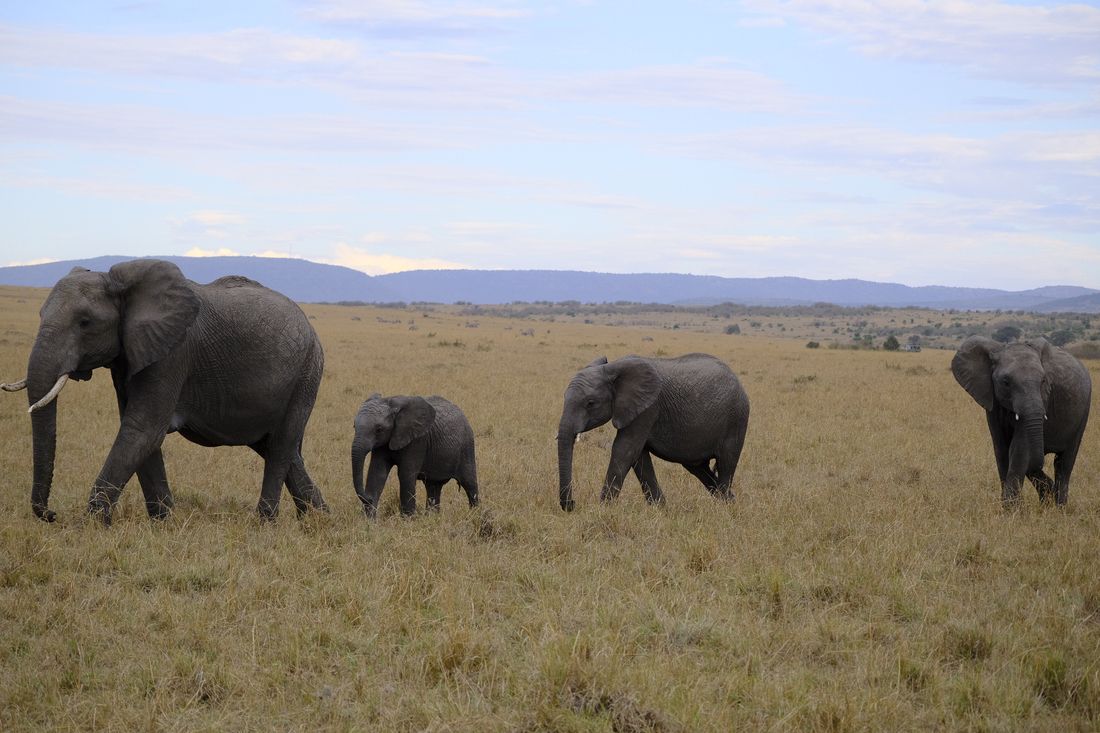
The landscape may appear empty, but it is never still. Beneath that enormous sky, everything is moving—towards water, towards food, towards shade, towards survival.
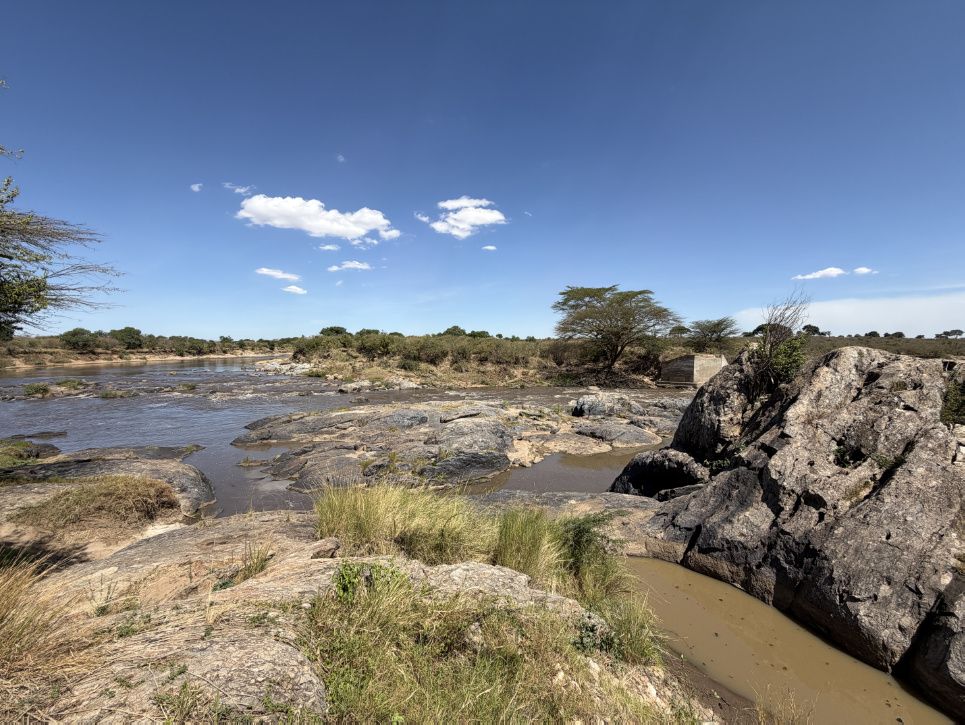
Later, we had lunch beside the Mara River, surrounded by baboons. Tiny birds hopped onto our table and beneath our chairs, fearlessly picking up the crumbs we dropped.
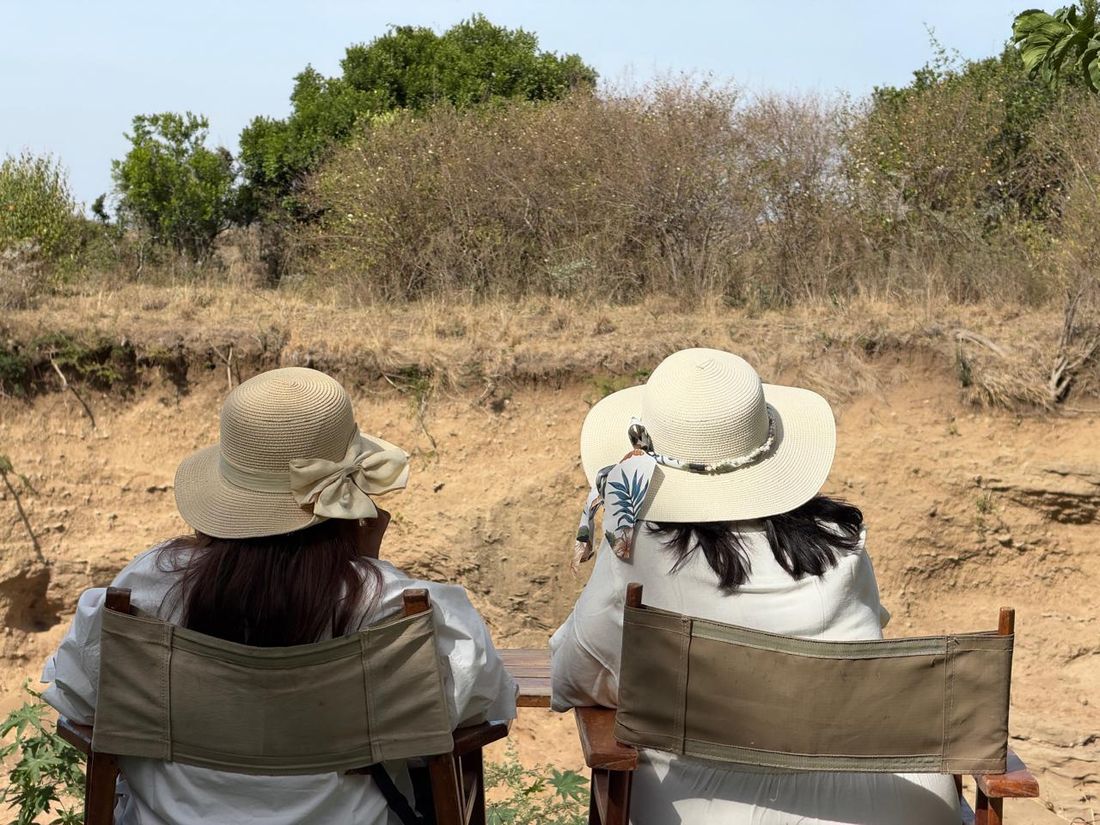
I realised that you don’t simply watch the wild here but you become part of its rhythm, if only for a moment.
The Maasai MaraChapter 16 of 26
Harsh Afternoon Sun
On the drive to the Mara Gate, four giraffes stood beneath an acacia, delicately nibbling at its leaves. Across the savannah, animals gathered in scattered clusters beneath the sparse shade of the acacias, each group standing far apart—their instinctive way of escaping the harsh afternoon sun.
The vastness made everything seem slower, quieter, and beautifully unhurried.
NaboishoChapter 17 of 26
Goodbye George, Hello Dama!
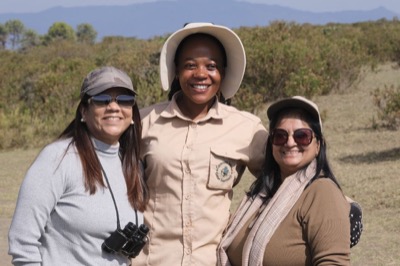
We arrived at Naboisho for our next adventure, and a new guide, Ms Damaris, was waiting to take over. Everyone called her Dama, so Dama she became for us too.
Young, energetic, full of warmth and blessed with a wonderful smile, she made us feel at ease almost instantly. A Maasai herself, she would be introducing us to Naboisho and Saruni Basecamp Wilderness. It felt less like meeting a new guide and more like making a new friend.
We told Dama that we had come all the way to see a pride of lions. She smiled and said, “Then you have come to the right place.” And that was all she said. Little did we know how right she was!
There was just one small development we hadn't quite prepared for. This time, our safari vehicle was an open jeep. No glass windows, no protective doors, nothing much between us and the wildlife. The thought of a lion casually walking up beside us suddenly seemed considerably less romantic!
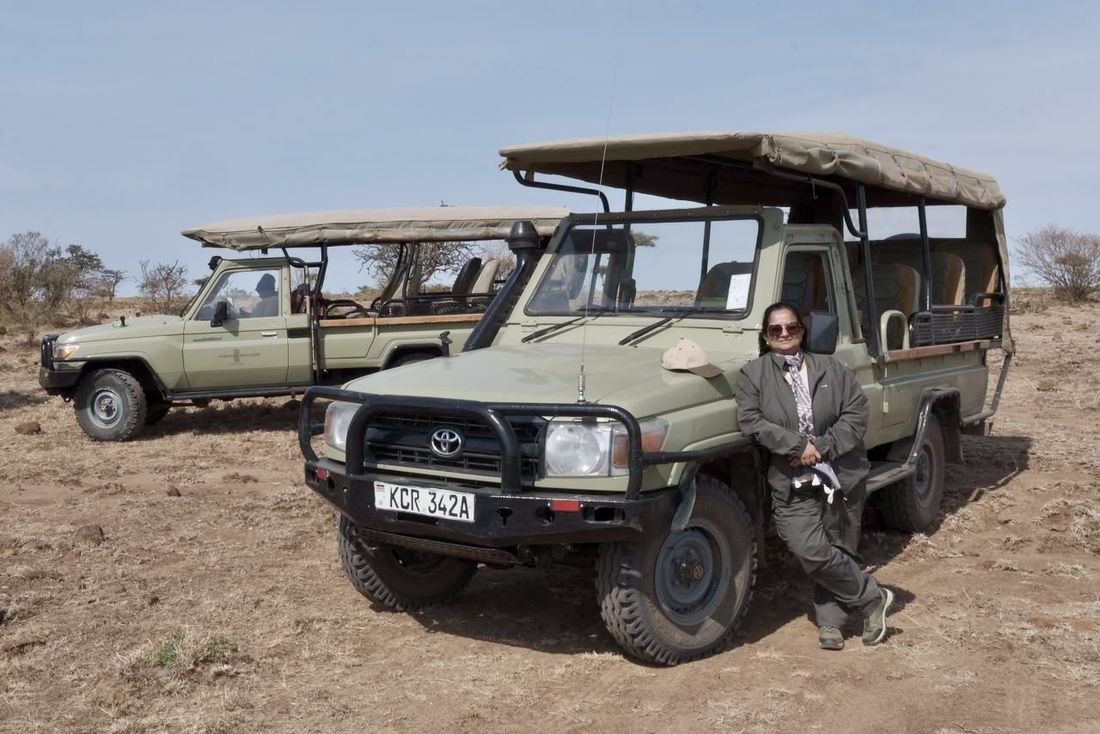
Dama reassured us that animals wouldn't attack as long as we didn't move or make a sound. We nodded obediently, though a small but important question remained unanswered: Had somebody explained these rules to the lions as well? We were about to find out!
NaboishoChapter 18 of 26
A Muddy Introduction & A Narrow Escape
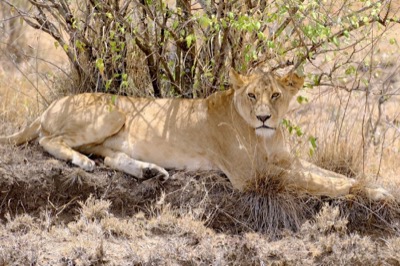
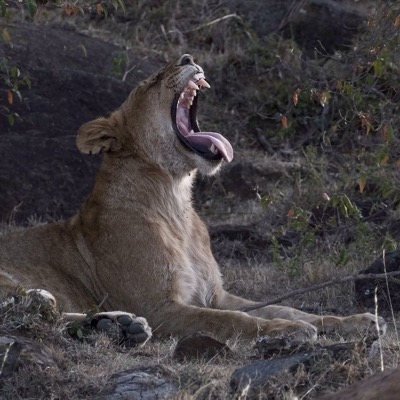
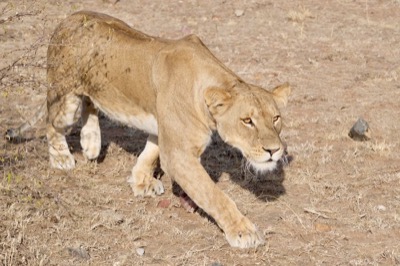
We had been in Naboisho for barely ten minutes when Dama spotted a lioness sitting about ten metres away. She looked at me with a mischievous smile and asked, “Want to get closer?”
Before I could decide whether that was a genuine question or a test of my survival instincts, she reversed the Land Cruiser and brought us to within four metres of her.
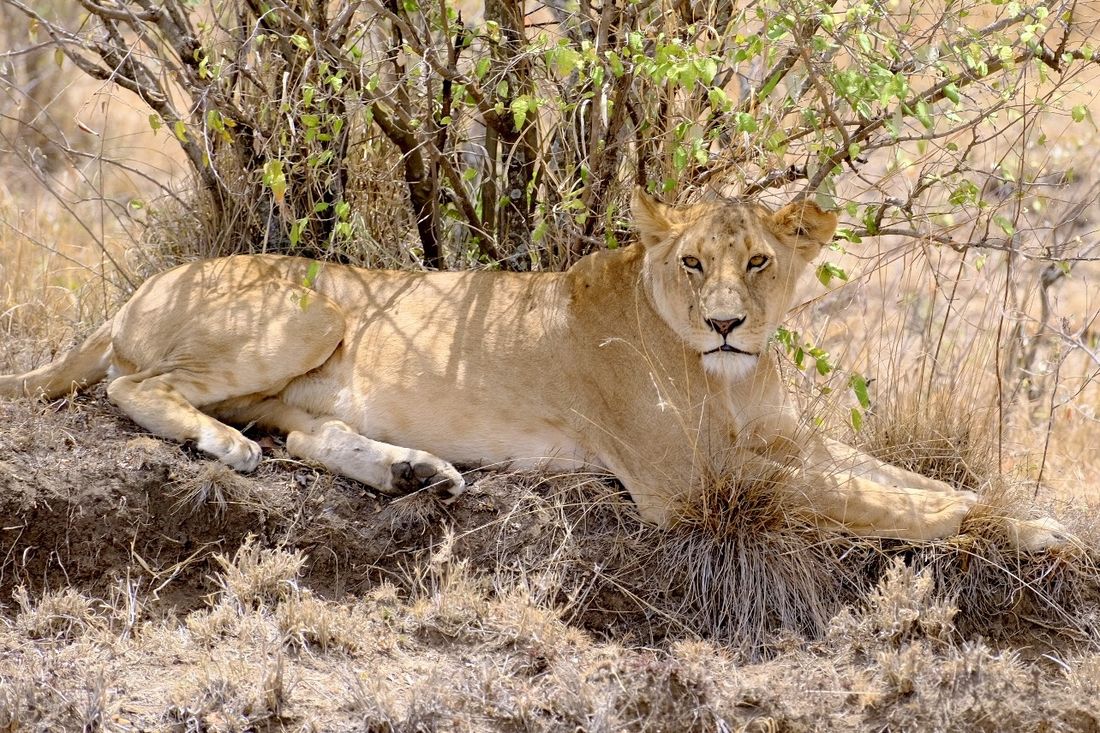
She was magnificent, motionless, and entirely at home. We hadn’t expected our first encounter to involve such an immediate and personal introduction.
As our open jeep approached, the lioness grew alert. Her fierce, glowing eyes seemed to look straight through us. Suddenly, the cheerful excitement of the safari vanished. We became acutely aware that there was very little between us and several hundred kilos of muscle, teeth, and perfectly justified confidence.
I had invested in a 70–300 mm lens, determined that no lion would ever appear as a tiny dot in my photographs. I hadn’t counted on Naboisho, where the lions came so close that my expensive zoom suddenly seemed to have misunderstood its assignment.
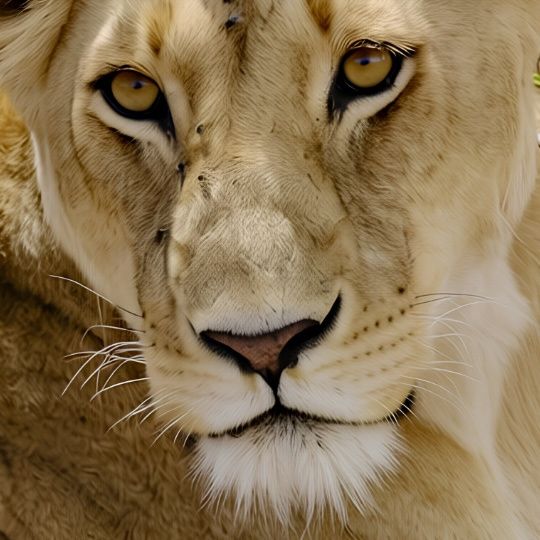
But it wasn’t the distance that unsettled me. It was the lioness’s eyes. Suddenly, my hands seemed far less steady than I had always given them credit for.
I quickly increased the shutter speed to 1/2000, hoping to compensate for the extra shake. The FujiFilm X-T4 was already using image stabilisation, but this was hardly a normal test. It wasn’t ordinary camera shake; it was a delicate tremor brought on by the possibility of my becoming part of the food chain.
I had switched off continuous shooting. There was no point in irritating her with a machine-gun burst of photographs when she was already looking at us as though she had several complaints to file.
The moment I decided I had enough pictures, I told Dama to move. I was feeling nervous, and I suspected that the lioness had noticed.
Dama tried to move but the wheels beneath us just spun in their place. Our jeep got stuck in the mud. Each time Dama pressed the accelerator, the engine roared, the wheels spun, and the lioness grew more irritated. She sat up straight, staring at us as if to say, “What kind of fools are these?” Smiles had disappeared. We were all watching her as she intentlygazed into our eyes. The open sides of the jeep suddenly felt less like a thrilling safari feature and more like a serious design flaw.
Then, just when we needed the engine most, it died.
There was a pin-drop silence.
The wind moved between us and the lioness. My friend and my wife sitting closest to the lioness seemed to have drawn the shortest straw in the group. I realised that I was unintentionally holding my breath.
Dama tried the engine again. The lioness answered with a deep, suppressed growl. Something turned in my stomach. I could feel the fear in everyone around me as we exchanged nervous glances.
Three very long minutes passed as we struggled to free ourselves. For those three minutes, the distance between an exciting wildlife encounter and a genuine emergency felt terrifyingly small.
Dama slowly reversed, keeping her eyes on the lioness. It was a delicate moment. Turn your back on her, and you risk a charge; stay put, and you risk becoming lunch.
Finally, we broke free. The moment we were safely away, the jeep erupted. We thanked God, talked over one another, laughed with relief, and replayed those terrifying minutes.
Dama laughed too, though I wondered whether our supposedly fearless guide was a little nervous herself. She never admitted it, of course. A Maasai guide has a reputation to maintain!
My friend’s wife later observed that at least we had sensibly arranged ourselves so that one person from each family was sitting away from the lioness. That way, if she decided to jump, there was a reasonable chance that one member of each family would make it back to tell the story.
We laughed, of course. However, without any formal discussion, this seating arrangement continued through every safari in Naboisho. Our muddy introduction and narrow escape had evidently done something to our collective psychology. It took a single lioness three minutes to test our courage and teach us humility.
Welcome to Naboisho!
NaboishoChapter 19 of 26
The Essential Rules of Wilderness
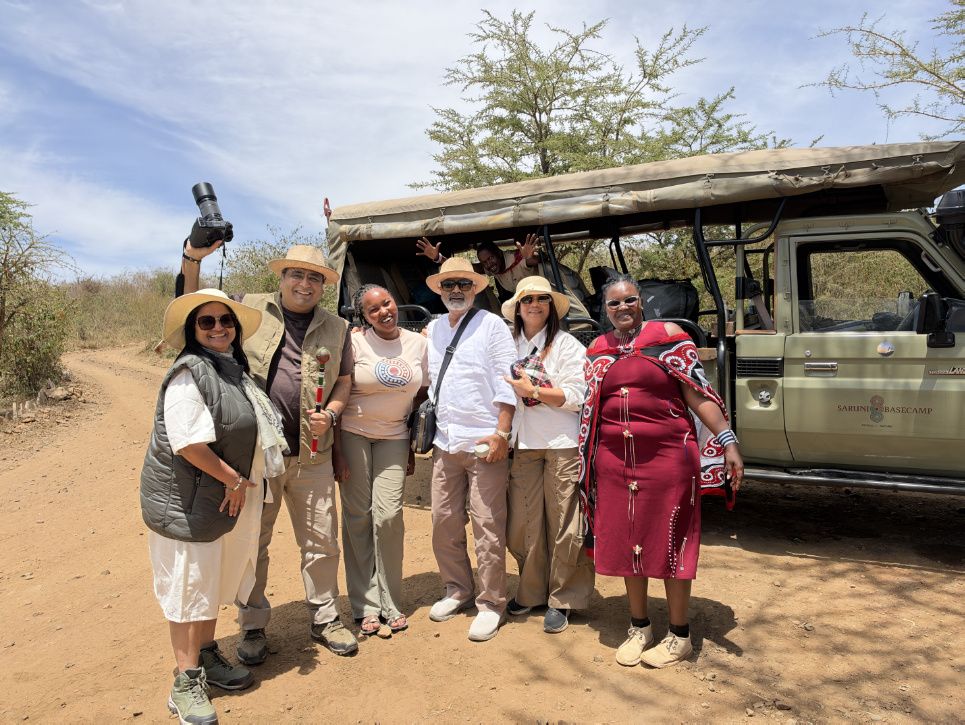
The reception was warm with Felicita and her entire team waiting for us to arrive. I told her the wait could have been long if the lioness had not had a heavy breakfast.
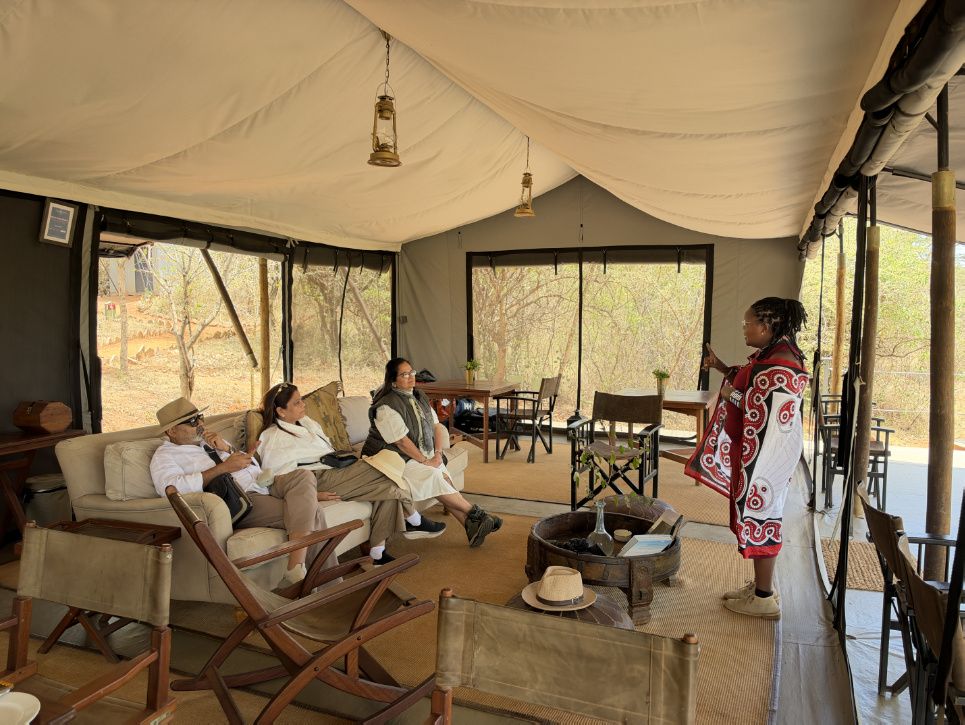
What followed was a rather sobering orientation on how to survive a holiday in the wild and not become a part of the wildlife’s experience. We were told not to step out of our tents, to call for guards for going anywhere, and to remember that the camp had no fences. Apparently, the animals had not been informed that this was a human residential zone.
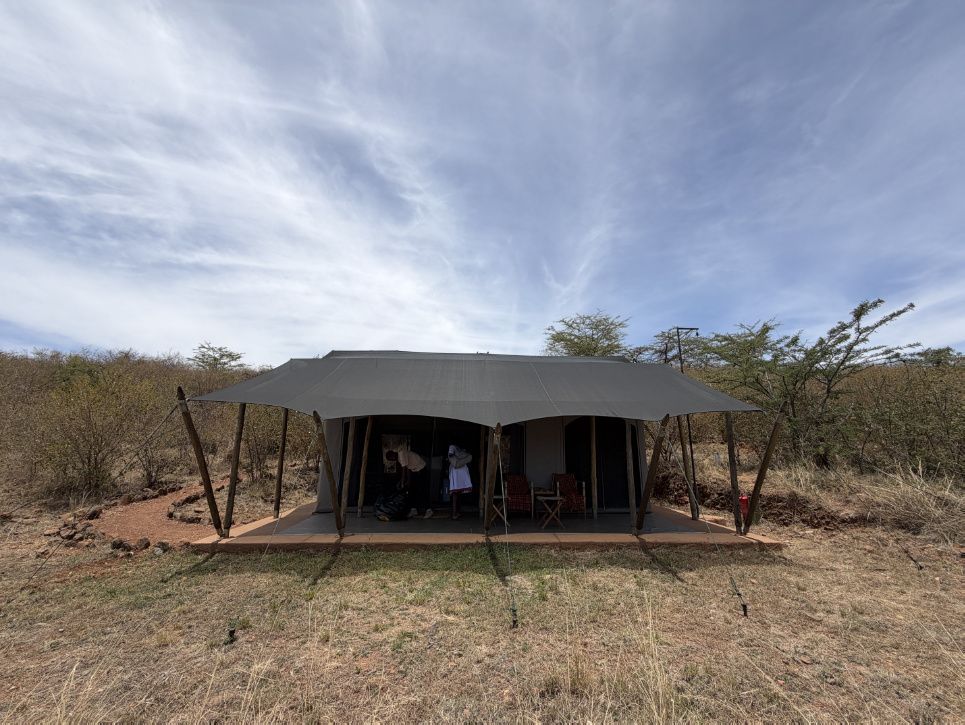
Every tent had access to a wireless set. In case of an emergency, all we had to do was announce our tent number to “Charlie”, and help would arrive. If we encountered an animal, the golden rule was to back away slowly without panicking. Quite a simple instruction, unless, of course, the animal happened to be a lion and your legs had other ideas.
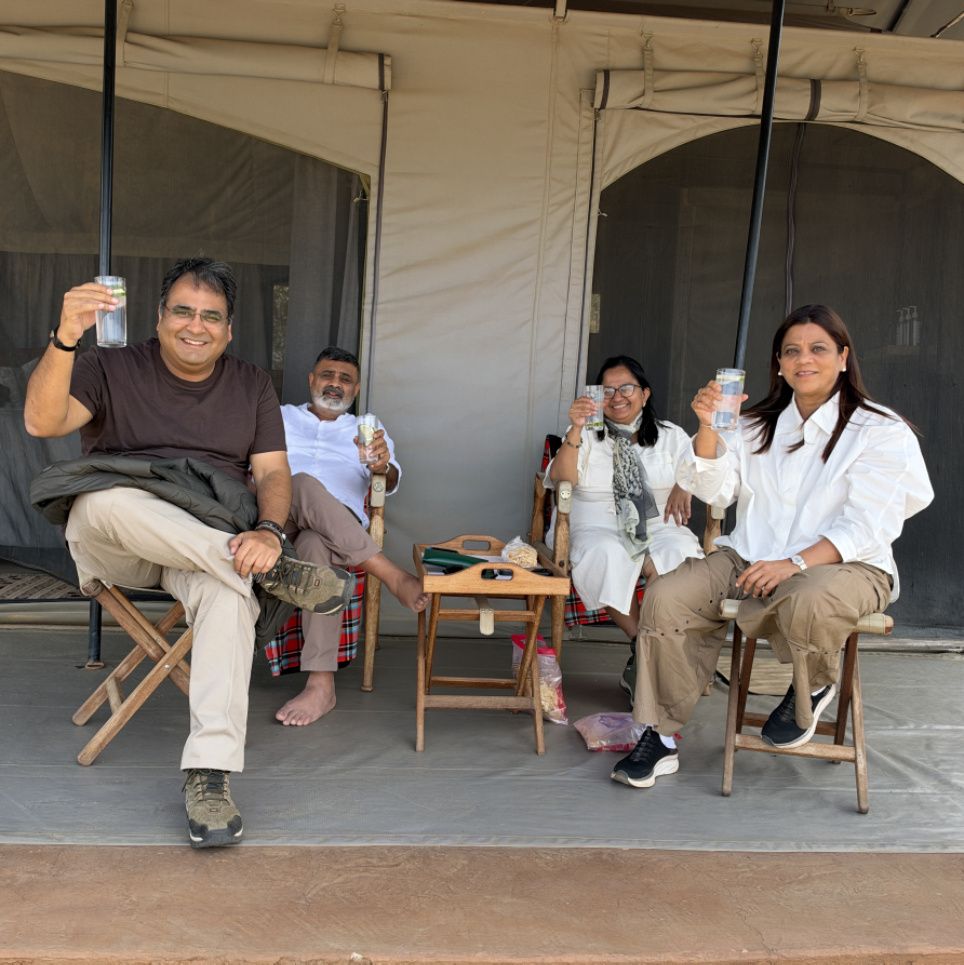
By the end of the briefing, we had learnt the essential rules of wilderness - stay inside, stay accompanied, stay calm and remember - Tent # 6 .
Pride of Lions
NaboishoChapter 20 of 26
Sundowner With Simba
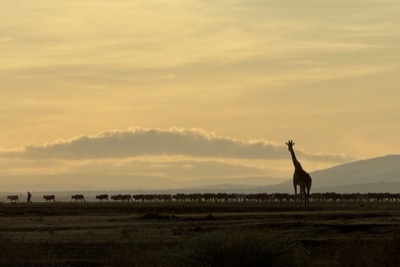
The evening began with four giraffes scattered across the horizon at almost perfectly equal intervals. They looked less like animals than a committee designing a measuring device.
Suddenly, the radio crackled, and Dama announced “Let’s go and see Simba!”
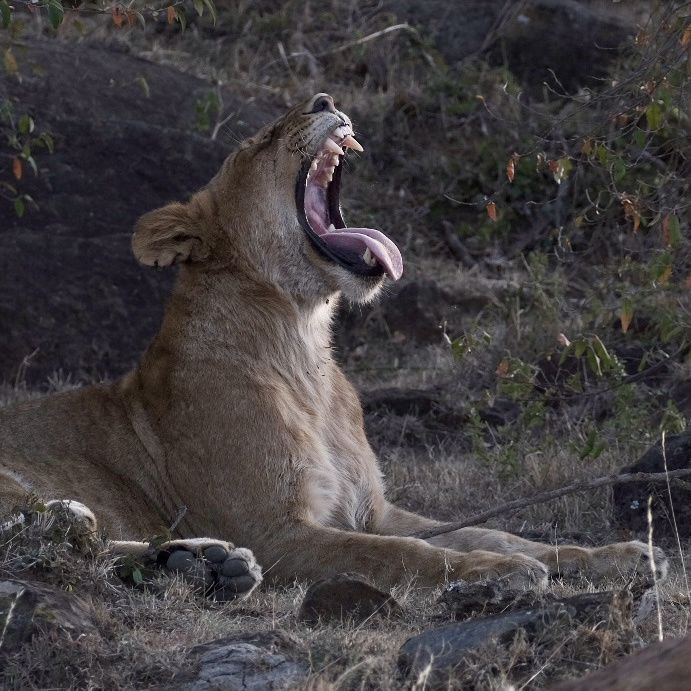
Dama pulled up alongside three other Land Cruisers and switched off the engine. What I had imagined would be a solitary lion turned out to be a pride of seven, lionesses and cubs, resting on some rocks. As the sun began its slow descent, they walked past our vehicles with the unhurried confidence of residents inspecting their property before settling on top of a hill.
We followed, keeping a respectful distance. The evening breeze was cool, the light golden, and the lions magnificent. For once, my camera seemed inadequate to capture the moment.
At first, excitement and nervousness competed for space inside us. But after half an hour, with the pride lounging and the cubs doing what cubs do, the Land Cruisers had become little more than parked furniture.
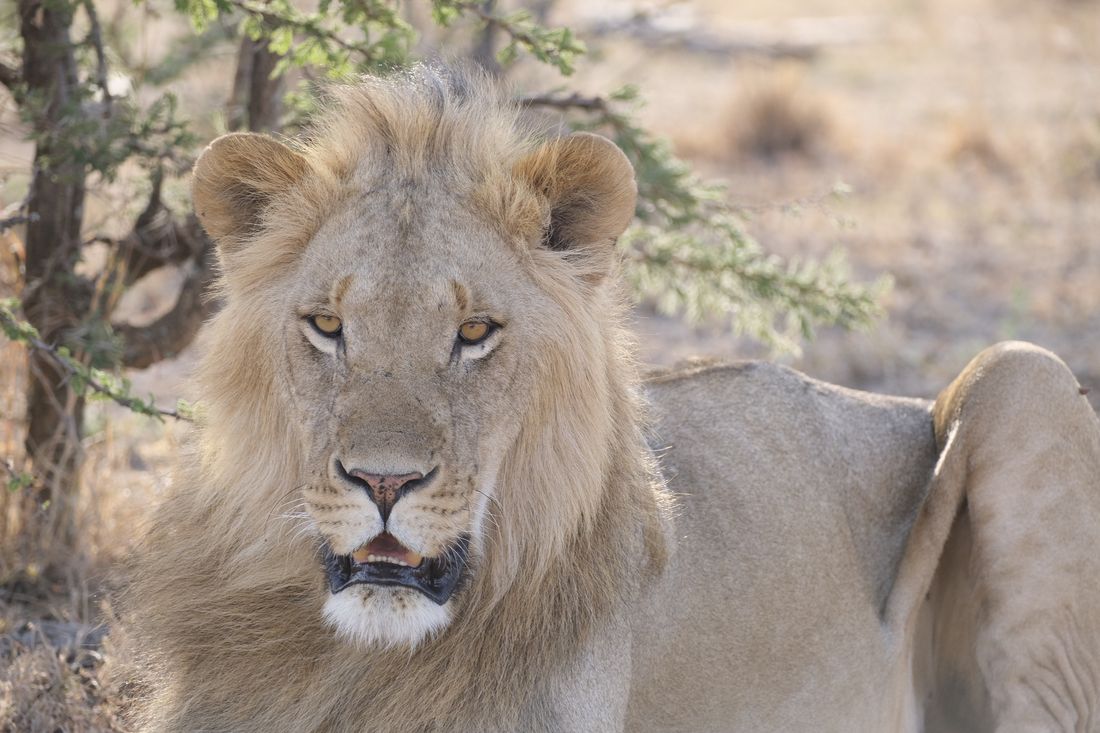
Dama, explained that the pride had not eaten all day and would probably go hunting tonight. If we were lucky, we might witness a kill the following day.
Then Dama delivered the line of the evening. “Let’s have our sundowner picnic.” A picnic? Here? With seven lions for neighbours?
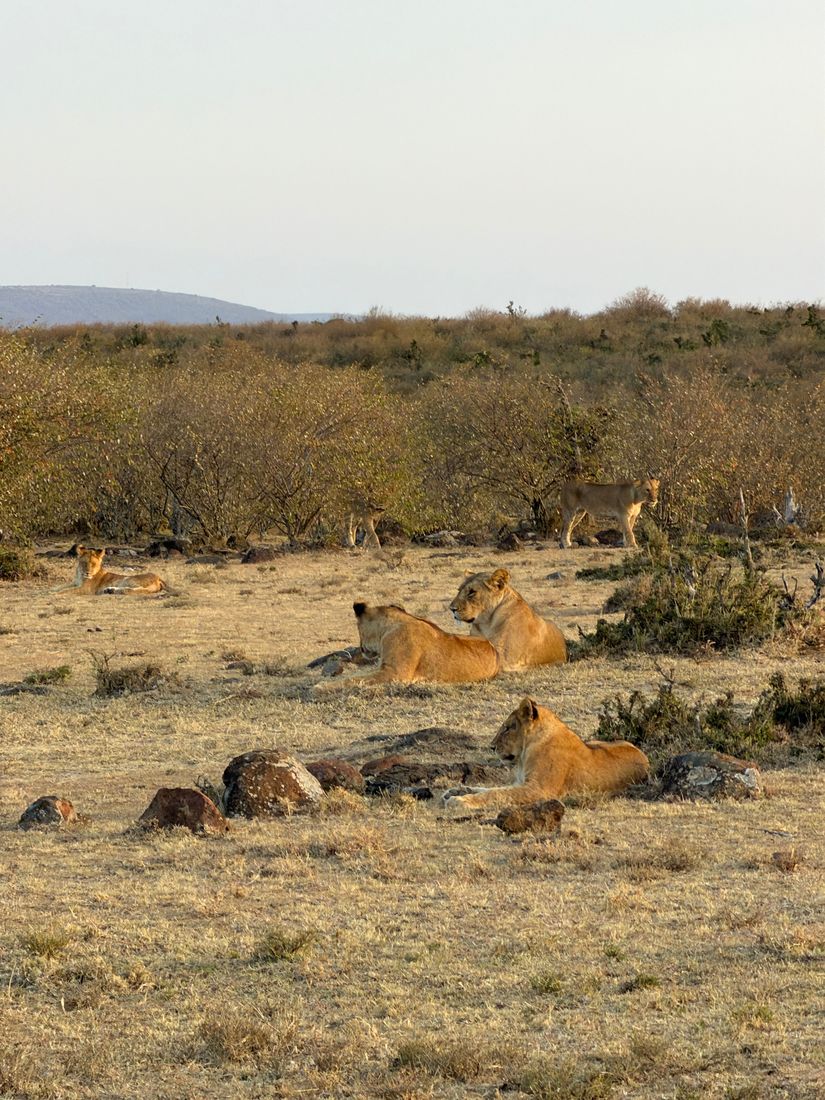
She opened the cooler box, produced a Tusker beer, and handed us crackers and sandwiches. Then came the chicken. My wife stopped her right there. Bringing chicken into a gathering of hungry lions seemed to be taking hospitality too far.
I looked at the lions. Then at the chicken. Then back at the lions. A disturbing thought occurred to me - would a human stuffed with minced chicken be considered a delicacy in Simba’s world?
Meanwhile, I tried to look like a seasoned adventurer, casually sipping my Tusker while gazing at the pride. The truth was less heroic. I was gulping it down. I did not want to be the evening’s special.
Mara had delivered. Seven lions, a golden sunset, and a picnic with Africa’s most intimidating table manners. I finished my Tusker, kept the chicken out of sight, and promised myself that every future sundowner would be held somewhere with fewer teeth.
NaboishoChapter 21 of 26
When The Lions Sang Us To Sleep
We are accustomed to watching the sun rise, but a moonrise is a different spectacle altogether. This one seemed impossibly large, lifting itself above the horizon and bathing the plains in a silvery glow. The light was strangely powerful, transforming the landscape into something otherworldly.
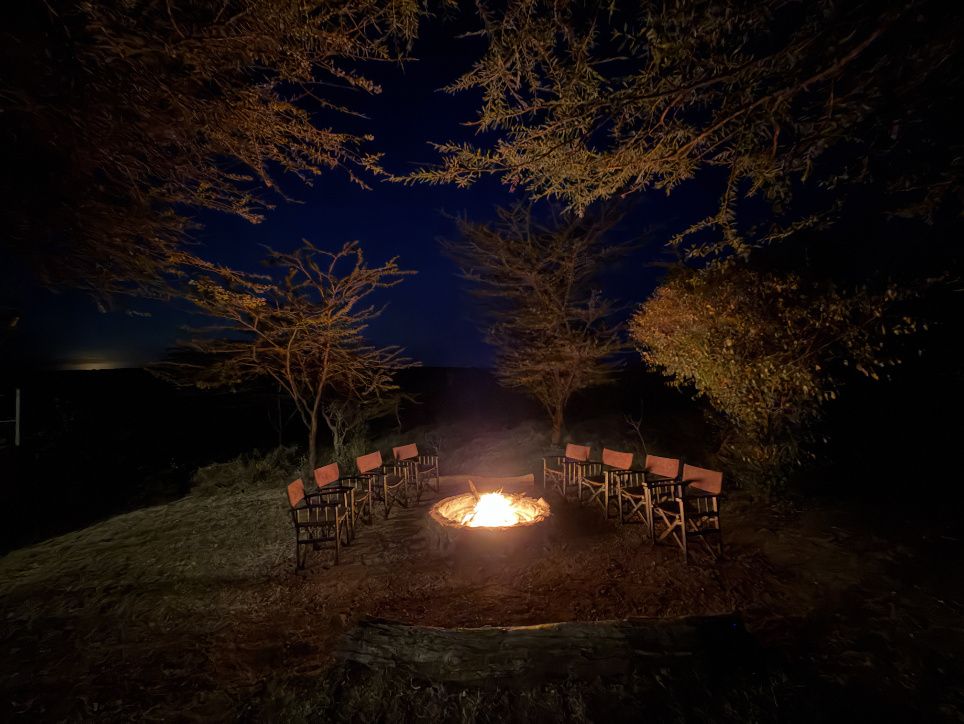
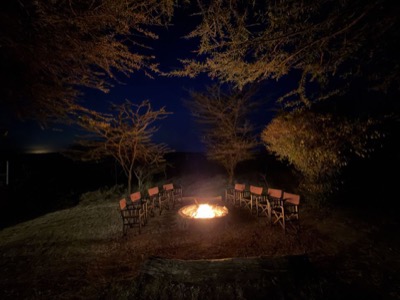
A perfect bonfire crackled against the gathering cold. We settled around it with fellow travellers, exchanging stories from the day - our encounters, our photographs, and the occasional exaggeration that every good safari story deserves.
Felicita explained how the conservancy worked, the role of the Maasai community, and how tourism helped support the land and its wildlife. It was a reminder that this wilderness was a living ecosystem sustained by a delicate partnership between people and nature.
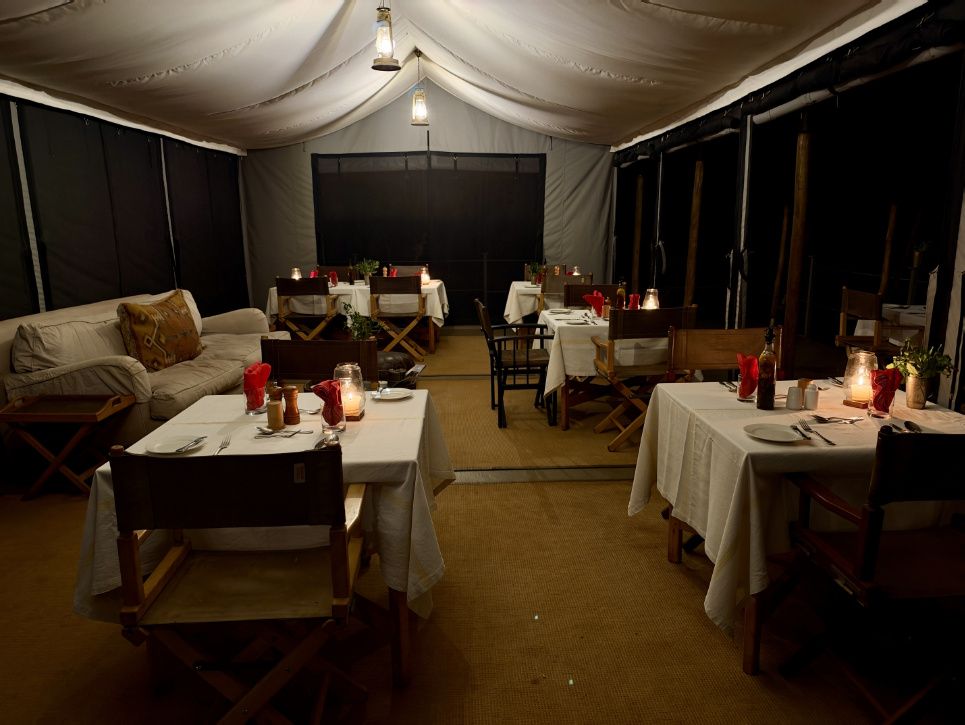
Dinner brought another surprise. Hilda and the camp staff gathered around our table, singing and dancing to traditional Maasai songs of welcome. Their voices, rhythms and infectious energy filled the evening with warmth. It was spontaneous, joyful and the sort of experience no itinerary can adequately promise.
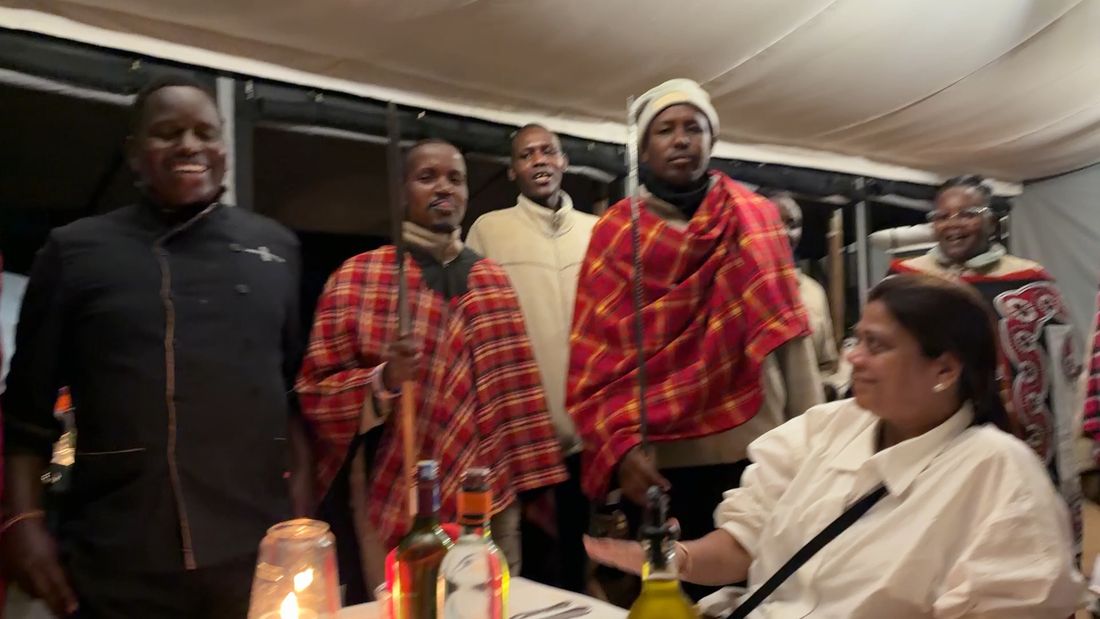
As we made our way back to our tents, accompanied by Masai guards, somewhere beyond the camp, a roar rolled across the darkness. It was deep and unmistakably powerful.
Inside the tent, the night began performing its own horror show. The wind howled, making the canvas of our tent flap and shudder. At first, the roar sounded distant. Then, over the next half hour, it seemed to grow louder. Conversations stopped abruptly. We sat still, listening, trying to determine whether the lion was somewhere out in the wilderness or had decided to inspect our tent personally.
There is a particular kind of fear that comes from being unable to see what you can hear. A roar in a documentary is thrilling. A roar outside your bedroom, when the walls separating you is essentially an expensive fabric arrangement, is an entirely different form of entertainment.
Every rustle suggested an uninvited visitor and we began to understand every word of the safety briefing we were given on arrival. And now it totally made sense.
Eventually, exhaustion won. And so I slept.
NaboishoChapter 22 of 26
A Dance With The Wild
The morning sunrise in the Mara did not arrive in silence. It came accompanied by an orchestra.
From the moment we stepped out of our tent, the air was alive with whistles, chirps, trills and calls, each seemingly trying to outdo the others. The volume was astonishing, yet there was a rhythm to it, as though the Mara had its own symphony and the birds were its musicians. I cannot recall ever hearing birdsong so loud, layered or intoxicating.
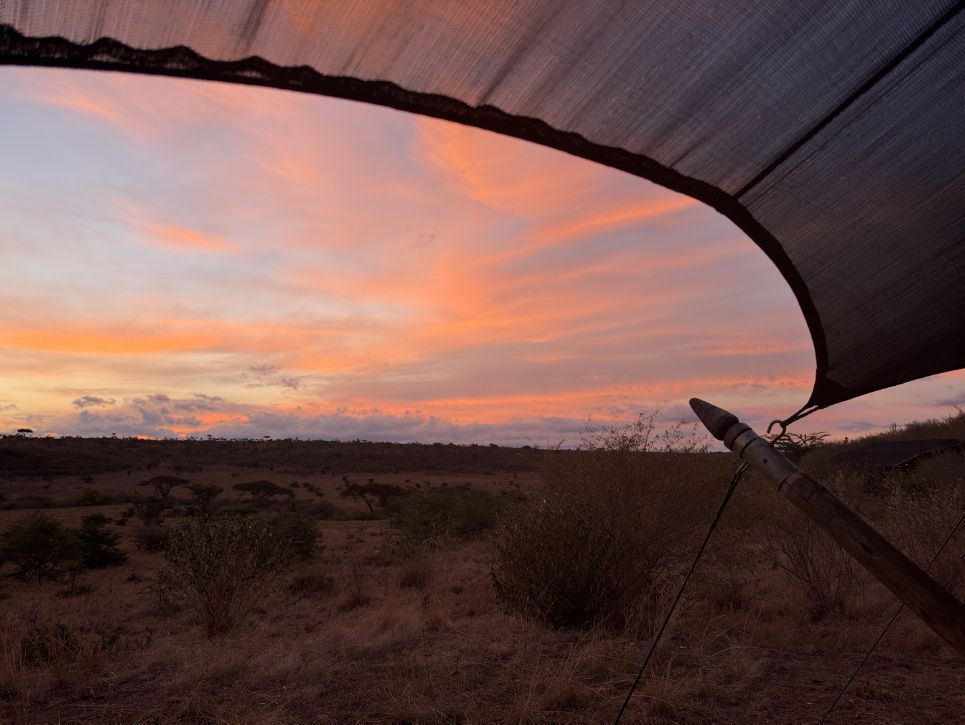
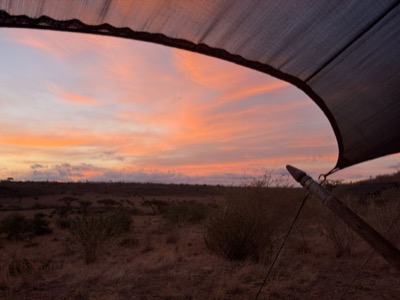
The sky staged a performance of its own. The horizon turned orange, and the clouds caught the first rays of sunlight, their edges glowing gold, amber and copper. A cool breeze swept across the grasslands, carrying the fragrances of soil, water, trees and wild grass. Everything seemed amplified - the sounds, colours, scents and even the breeze against our skin.
There is something about the Mara that defies moderation. Its beauty and sounds are intense, as though nature here has no interest in doing anything by halves.
Soon we were back in our safari vehicle, ready to explore.
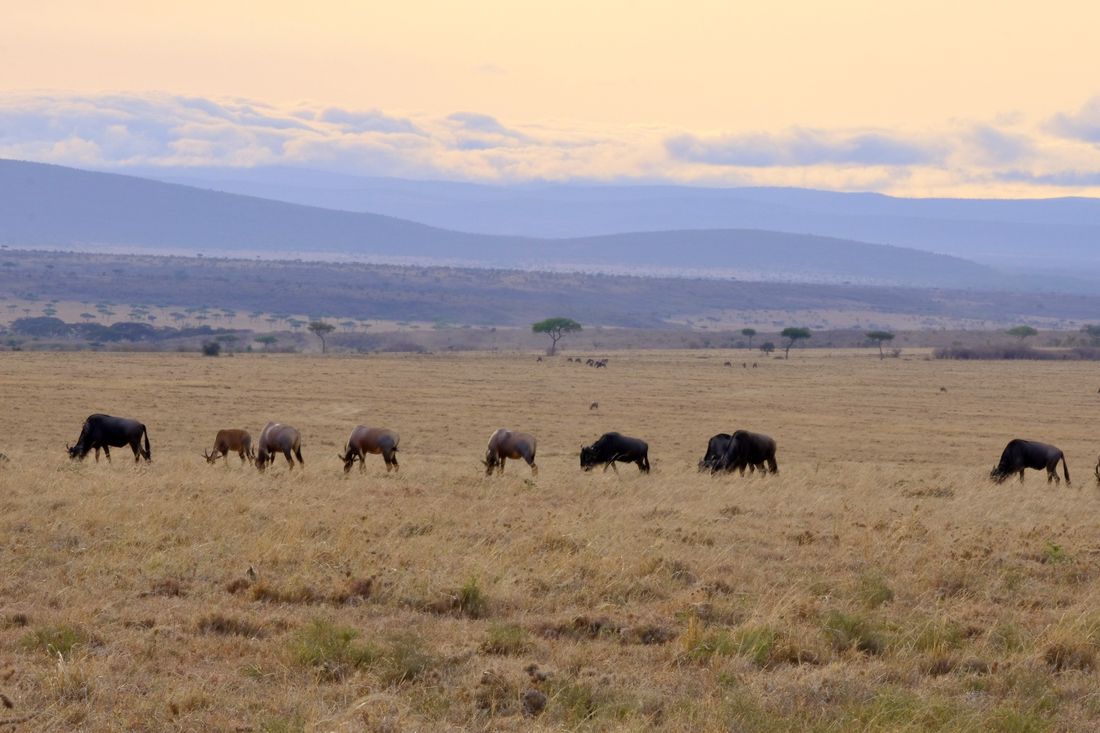
The pride of lions we had encountered earlier had almost become familiar company. We encountered a family of elephants moving with the unhurried confidence of giants and spotted a couple of cheetahs resting after a successful kill. They seemed to have earned the right to do nothing for the rest of the morning.
Our own reward was a bush breakfast.
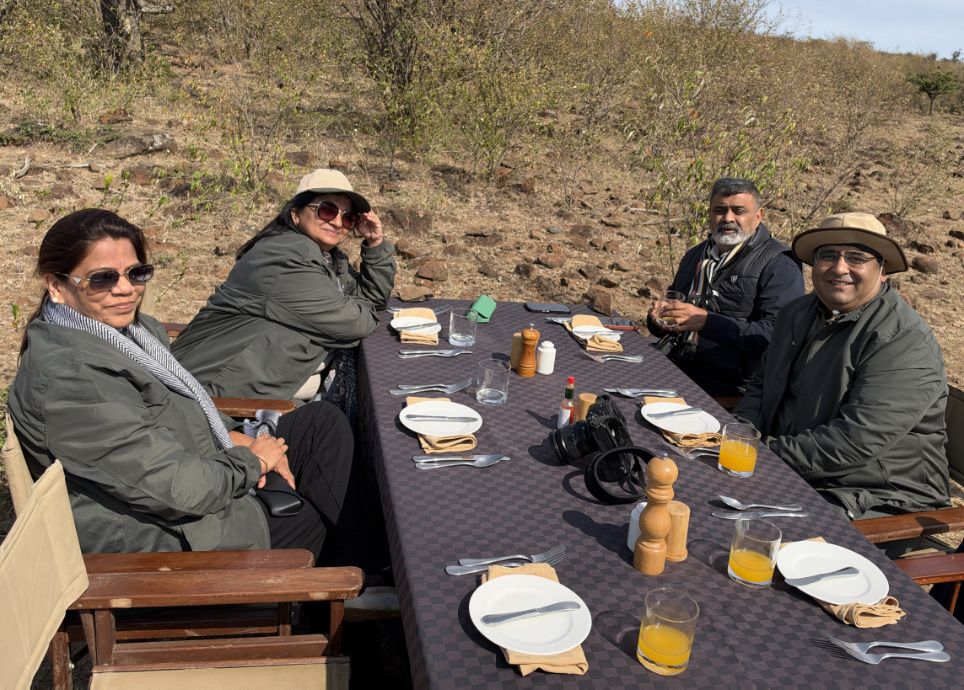
Felicita had somehow managed to transport an entire kitchen into the wilderness. Tables were laid, and there we were, seated in the middle of the open savanna, with the grasslands stretching into the distance and the African sky serving as our ceiling. No restaurant, however grand, could have competed with that setting. There is a peculiar pleasure in eating a perfectly prepared breakfast where nature, rather than architecture, does all the decorating.
NaboishoChapter 23 of 26
Among The Maasai
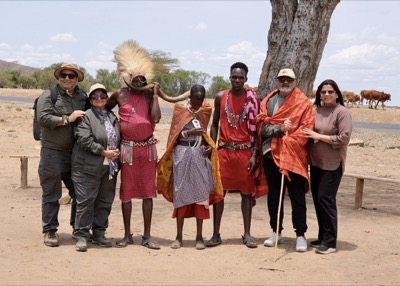
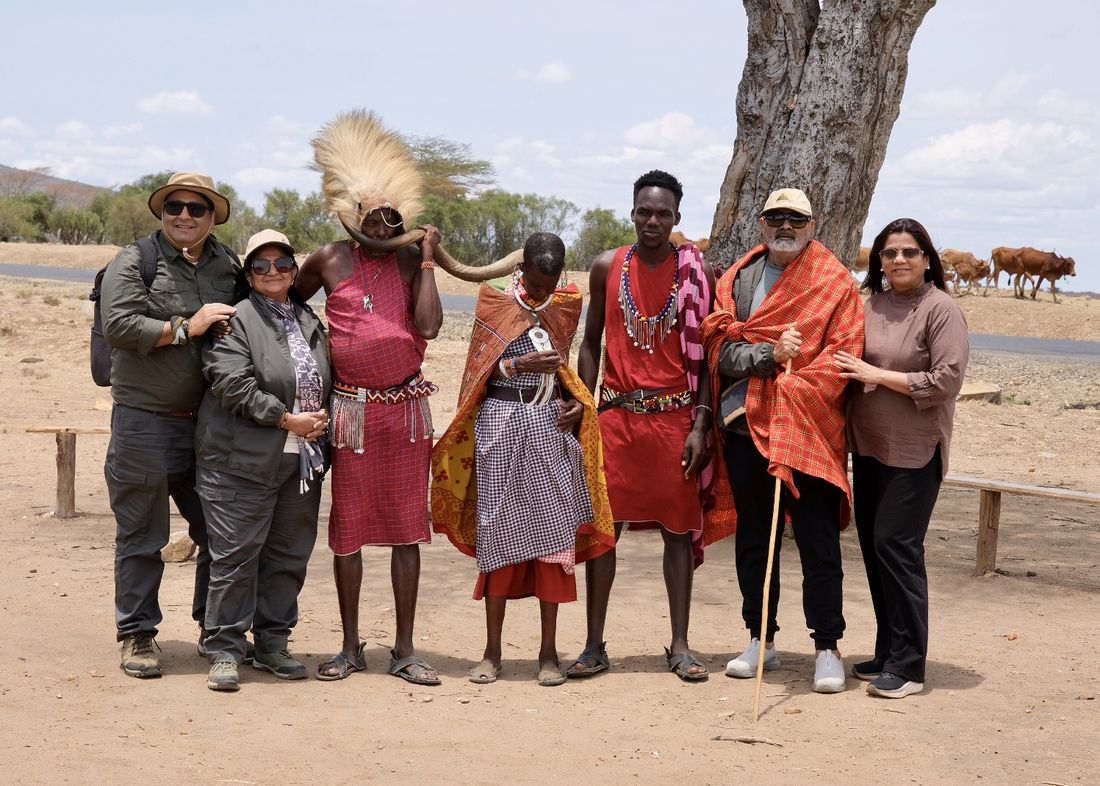
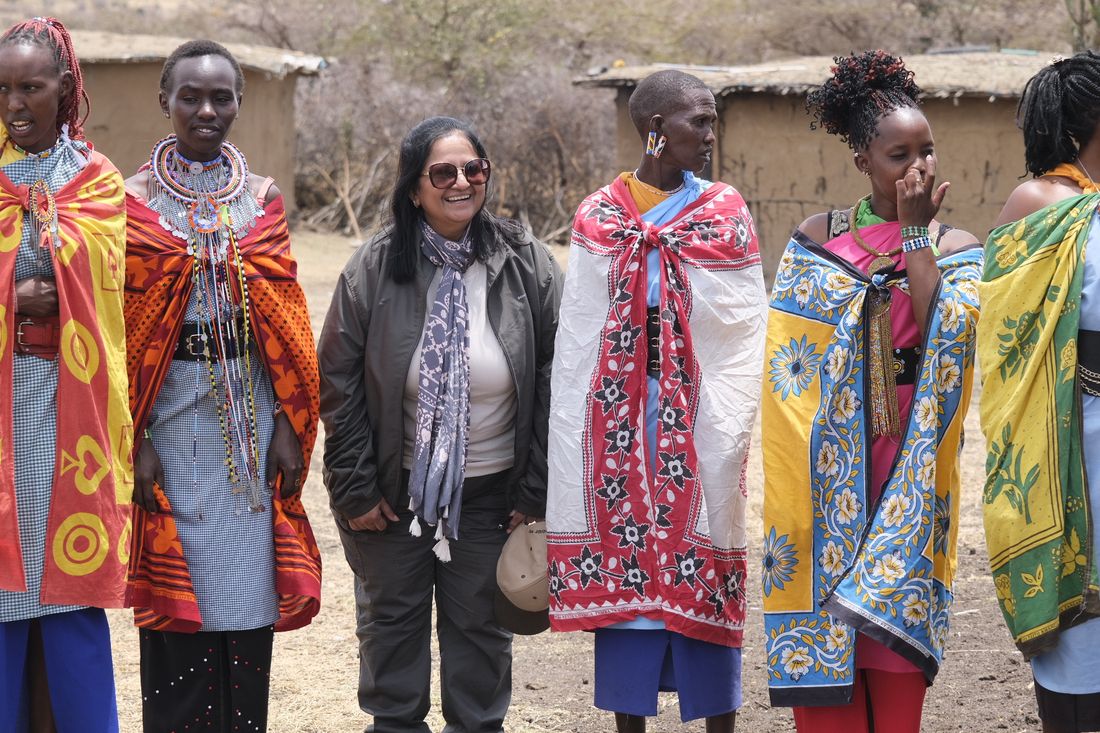
Then we visited a Maasai village where we were welcomed by the village chief, whose imposing headgear, fashioned to resemble a lion’s face, made quite an impression. Men and women sang a welcome song as they danced around us.
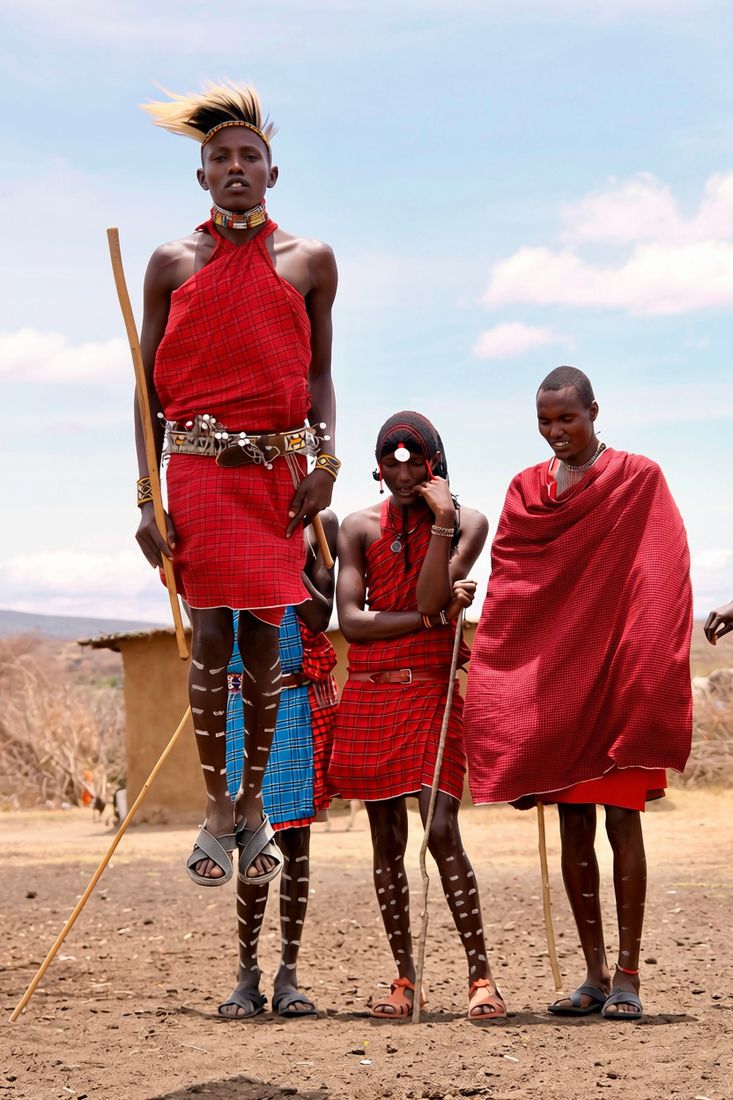
Once inside, the young men performed the Maasai adumu, often described as the jumping dance. It is one of the community’s most distinctive traditional performances, with dancers taking turns leaping vertically into the air, often keeping their bodies remarkably straight. The singing rose and fell in a hypnotic pattern as the dancers responded with their leaps, each seemingly determined to defy gravity a little more than the last.
Watching it was exhilarating. Participating in it was another matter altogether.
We joined the circle, attempted to follow the rhythm and jumped alongside our Maasai hosts. The contrast between their effortless athleticism and our enthusiastic approximation must have been entertaining. They made the movements look natural; we looked like tourists testing the limits of our knee joints.
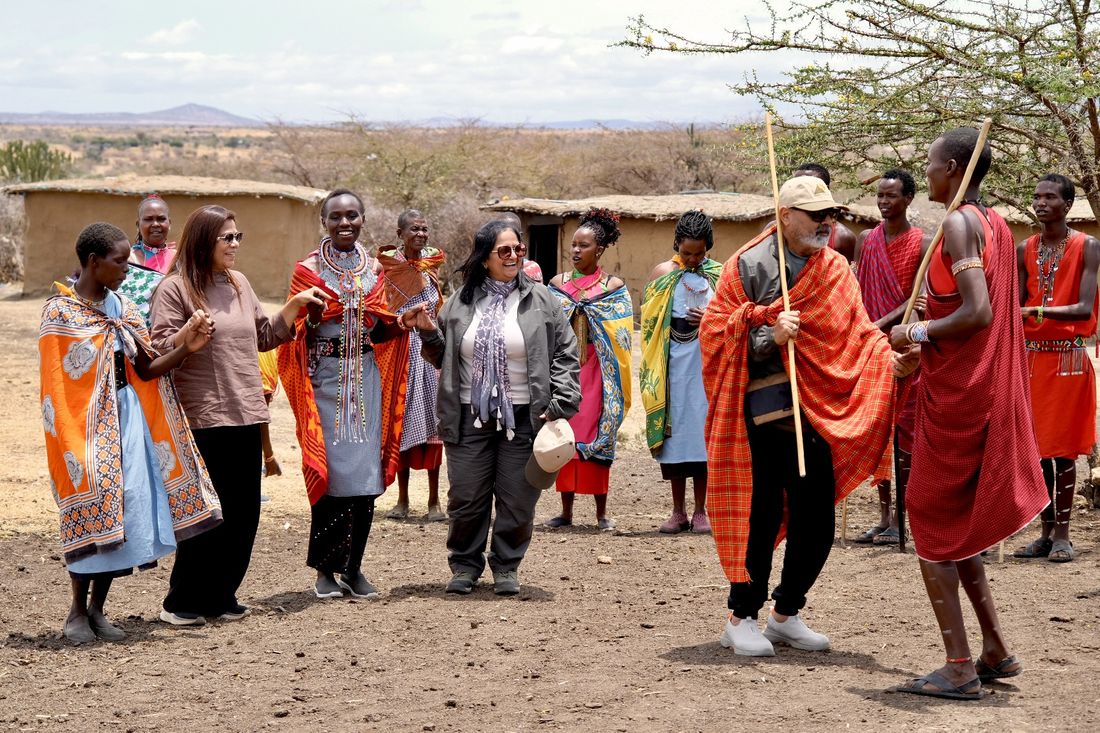
Yet, for those few moments, the distinction between visitor and host seemed to dissolve. There was laughter, music and shared joy that required no translation. We may not have understood every word of the songs, but we understood their spirit.
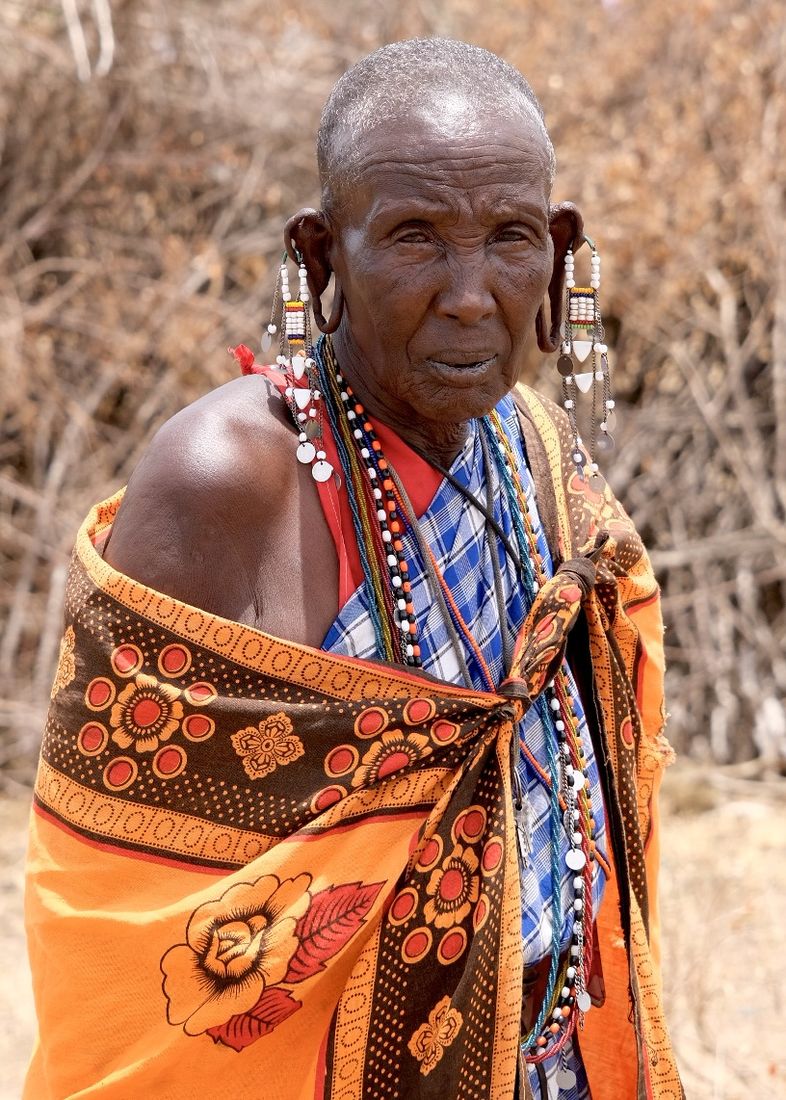
We were invited into a traditional Maasai home, where we learnt how to make a fire using traditional methods. The exercise made our dependence on matchboxes and gas lighters seem rather embarrassing.
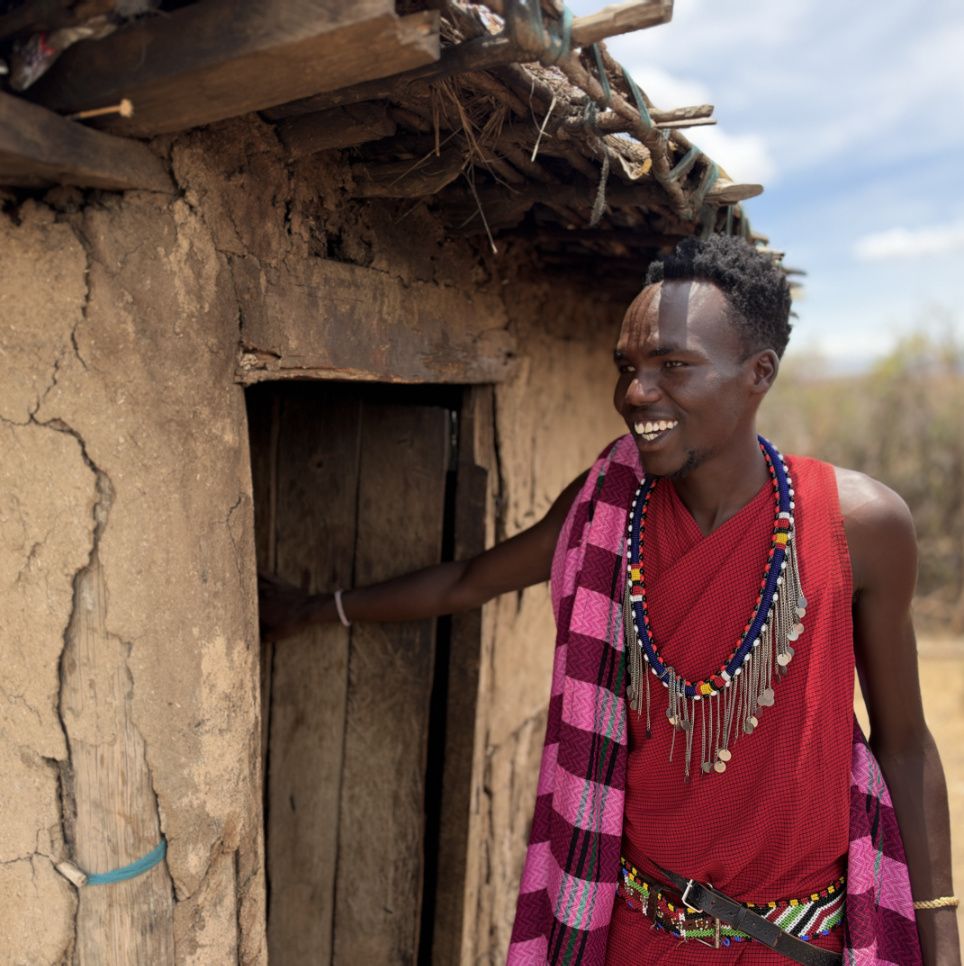
It was one thing to photograph the Maasai, admire their colourful attire or read about their traditions. It was another to stand among them, feel the rhythm in our bodies and become part of the celebration. We left with a deeper appreciation of a culture whose traditions remain an important source of identity and community in a rapidly changing world.
NaboishoChapter 24 of 26
The Hunt
The afternoon safari brought us face to face with the rawest expression of life on the savanna: the hunt.
We spotted two lionesses preparing to pursue a gazelle. One stood near the wheel of the jeep, right beside me.
The lionesses watched, assessed and waited. Their bodies seemed almost to disappear into the grass, every muscle poised and every movement deliberate. The gazelle appeared unaware of the danger gathering nearby.
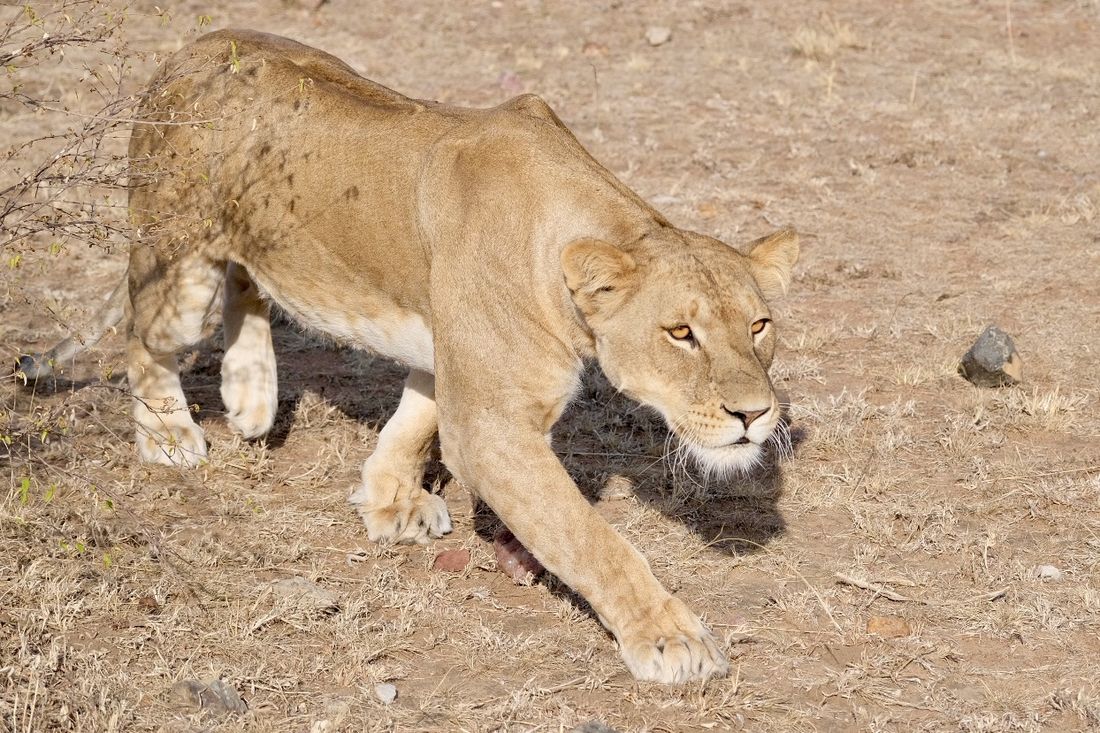
We watched, hardly daring to speak. In the wild, a hunt requires patience, positioning, timing and an understanding of the terrain. A few metres can make the difference between a meal and failure.
Then came the moment. The lionesses sprang into action.
Stillness became a blur of speed. Elephants trumpeted, and alarm calls rang across the grasslands as other animals reacted to the commotion. The savanna erupted into warning and movement.
We watched from our vehicle, hearts pounding and eyes fixed on the chase. It was impossible not to root for the gazelle. The lionesses were magnificent, but the vulnerability of the fleeing animal was equally compelling: a struggle for survival stripped of sentiment.
Then, as suddenly as it had begun, the chase was over.
The lionesses failed to secure their kill. The gazelle escaped, and the tension drained from the scene.
We sat there, exhilarated and slightly stunned. Our safari vehicle had become a front-row seat to a performance no wildlife documentary could quite reproduce. A screen can show a chase, but it cannot replicate the sound of the grasslands erupting around you or the sensation of holding your breath as an animal fights for its life.
The Mara had reminded us that wildlife does not perform to a script, and nature owes us neither a spectacle nor a satisfying ending. Sometimes the most extraordinary privilege is simply being present when life unfolds on its own terms.
NaboishoChapter 25 of 26
More Than Enough
By the time we set out on our night safari, the day had given us more sights, sounds and sensations than we could have imagined when we first arrived in Africa.
The night safari was relatively uneventful, at least by Mara standards. After the day’s spectacle, that quieter rhythm was welcome. Back at camp, we noticed that there were no lions roaring near our tents. For once, the wilderness seemed willing to leave us alone.
As we settled into our tent, the sounds of the wilderness became a gentle backdrop rather than a source of apprehension. Perhaps that is the secret of this place. It gives you so much that, eventually, you stop asking for more. Somewhere along the way, you realise that you belong, however briefly, to a world that existed long before you arrived and will continue long after you leave.
That night, we slept peacefully beneath the vast African sky, with the savanna breathing around us.
It was enough. More than enough.
And somewhere out there, beneath the full moon, the Mara continued its timeless dance.
Going homeChapter 26 of 26
Your Mara
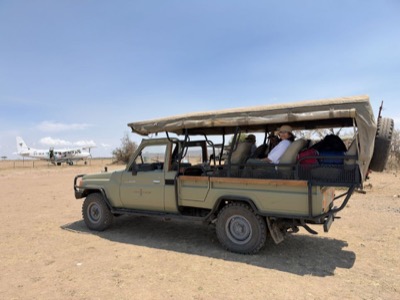
The airport in the Mara was something I could never have imagined in my wildest dreams. In fact, calling it an airport was being rather generous. There was no terminal, no check-in counter, no security queue, no baggage belt, and certainly no one asking us to remove our shoes. There was simply an open patch of land, five or seven Land Cruisers parked around it, and a handful of travellers waiting patiently for their flights.
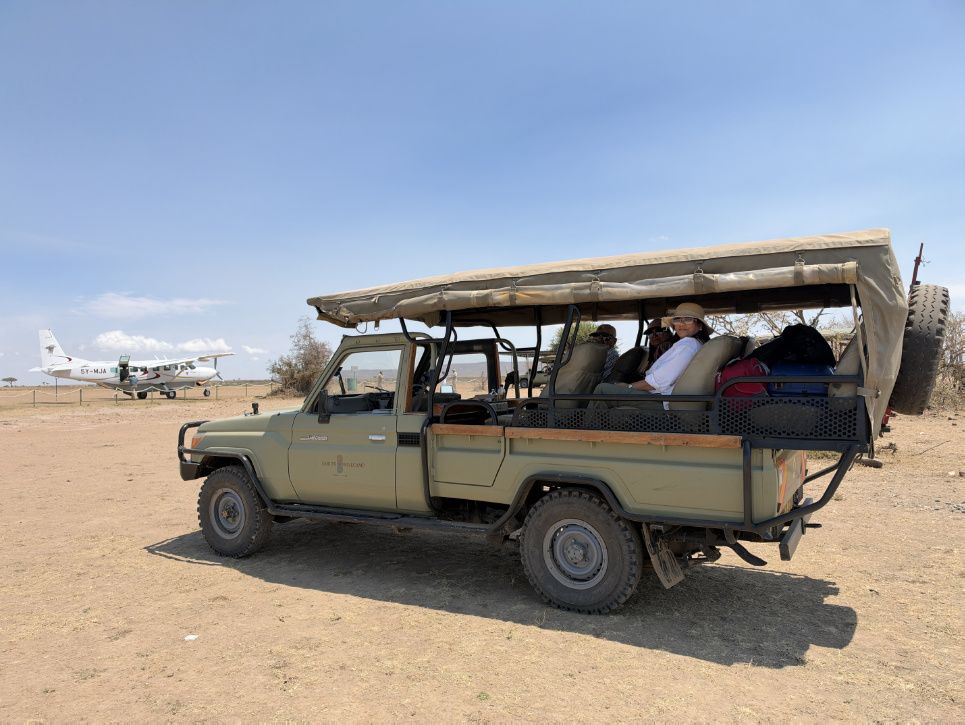
Our version of an airport lounge was the great outdoors, with the occasional breeze carrying a little African dust as complimentary refreshment.
A small aircraft soon appeared and stopped right in front of us. The pilot stepped out wearing shorts, a T-shirt and aviator sunglasses. He looked less like someone commanding an aircraft and more like a man who had stepped out for a quick drive to the supermarket.
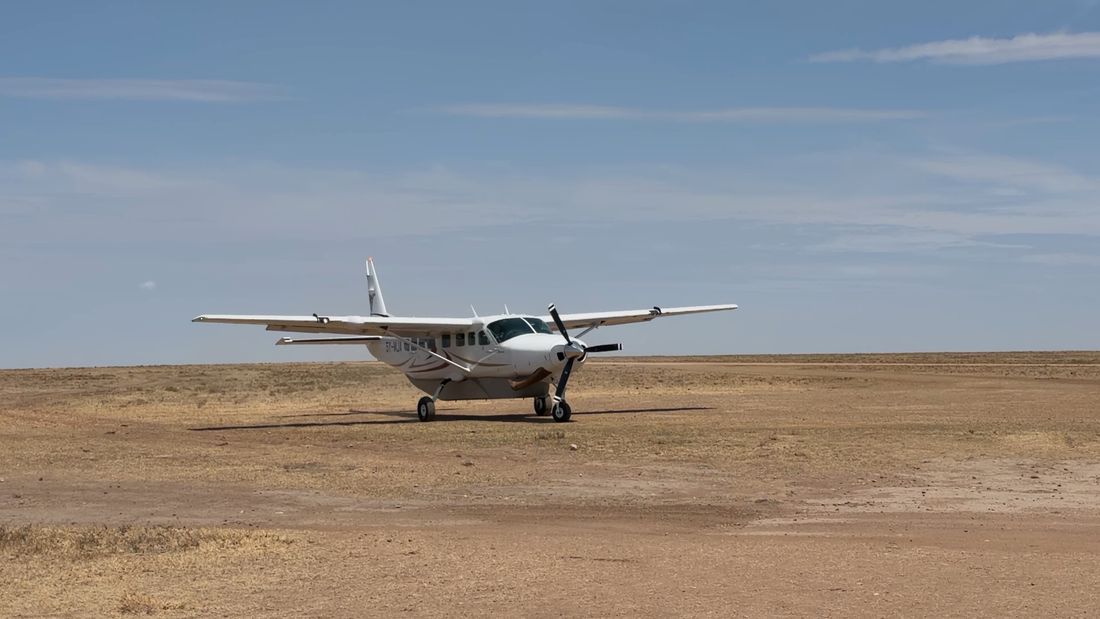
Within five minutes, the passengers had hopped aboard, the pilot had climbed back in, and off they went. The plane disappeared down the dirt runway, leaving behind a magnificent orange cloud of dust that hung in the air like a dramatic Bollywood farewell scene.
And then, as if on cue, our aircraft emerged from that very cloud. No airport announcements, no boarding calls, no gate numbers. Just a plane materialising through the dust, as though Africa itself had arranged our departure.
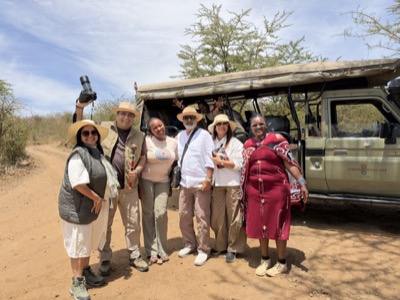
Before boarding, we asked Dama to take one last photograph of us in front of the aircraft. After all, one must have photographic evidence of having flown out of an airport where the runway was a dirt track and the lounge had better wildlife views than most five-star resorts.
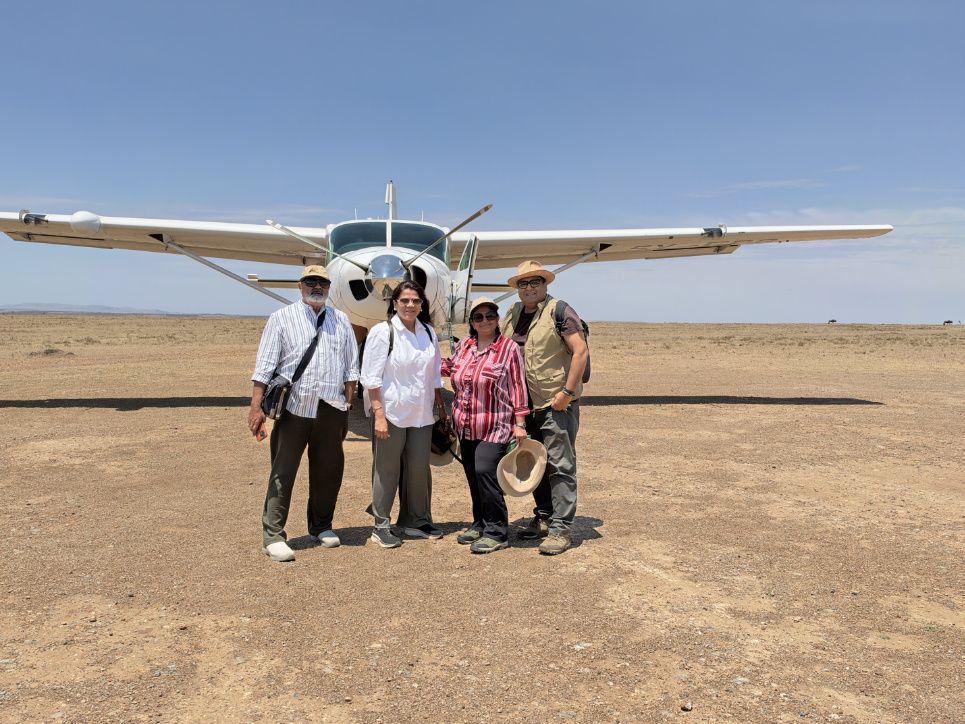
We posed proudly beside the plane, trying to look like seasoned bush travellers rather than people secretly wondering whether this thing was actually going to fly.
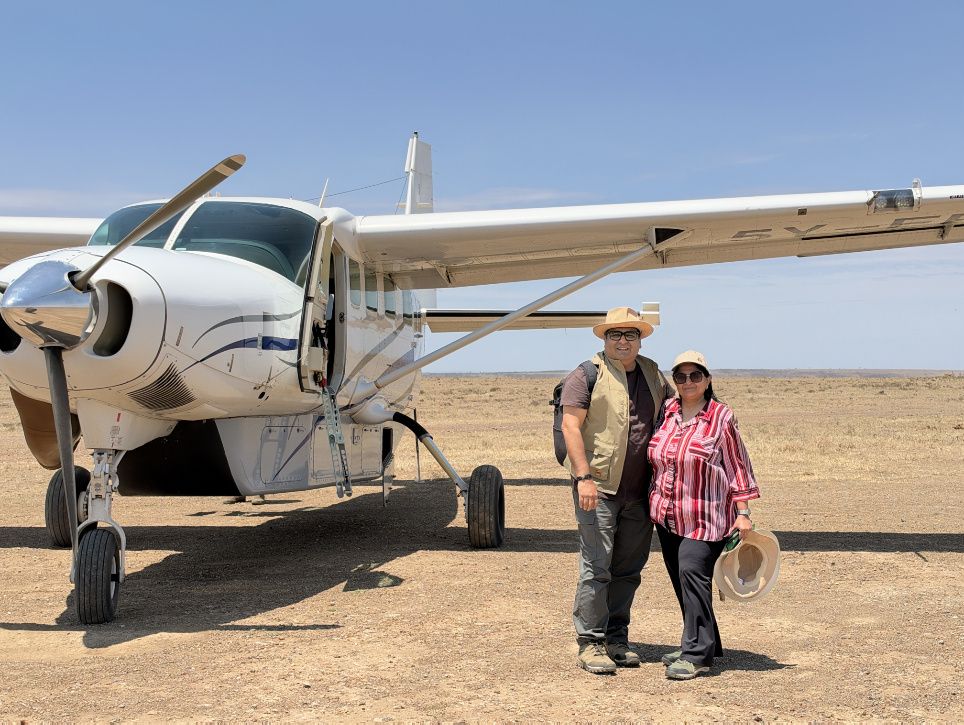
And just like that, our Mara adventure was drawing to a close. Governors’Aviations aircraft lifted from the Mara.
The landscape slowly became smaller. From above, the roads looked like lines drawn across an enormous canvas. The animals disappeared. The details disappeared. The vastness remained.
There was something almost uncomfortable about leaving. Not because I believed I belonged there. I did not. But because for a few days I had been allowed to enter another rhythm of life. A slower one. A more attentive one.
Also, Mara taught me to be more accepting of events around me and about my dreams or the outcome of my efforts. You cannot summon a lion, create a sunset or choreograph a herd. You can only wait.
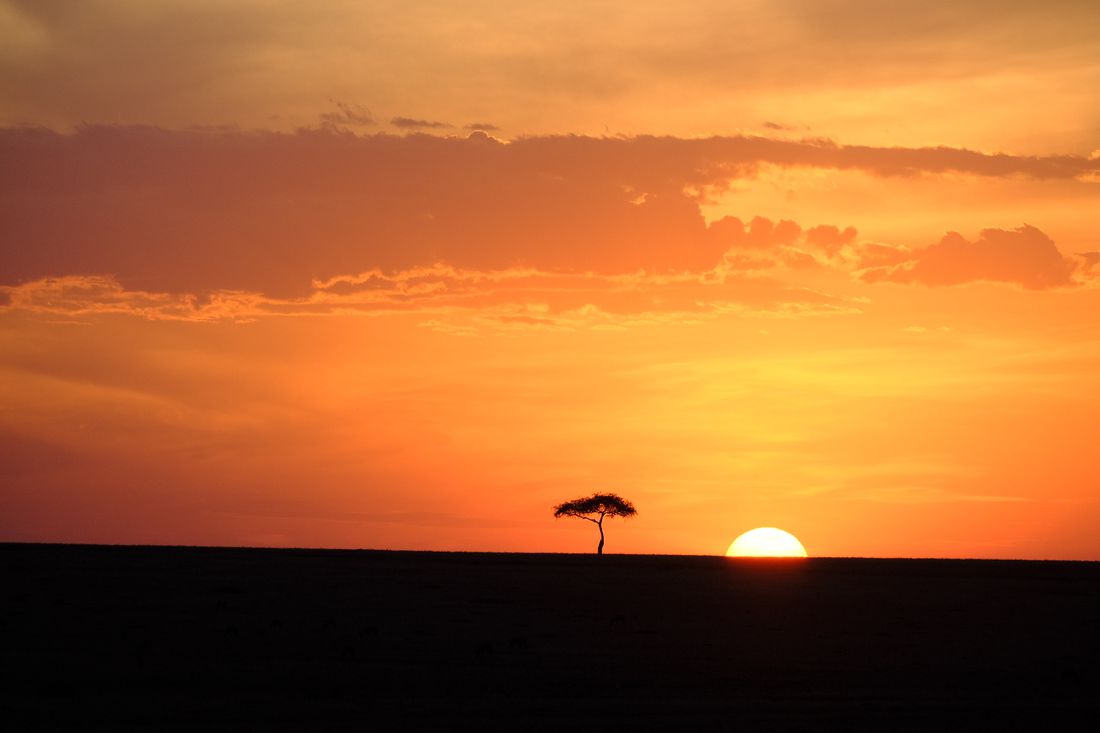
I went to Kenya to see The Mara. I came back having understood that accepting the unexpected is the true pleasure of living.
Mara refuses to be reduced to one description. Every traveller sees a different Mara, shaped by what they bring to it and no one returns to the same Mara. Your Mara cannot be somebody else’s Mara. Your lioness, your river, your Acacia become part of your own Africa.
Field notes
What we saw
A checklist kept from the journal. One animal was only ever heard.
- LionsOne sat four metres from the jeep. Then the engine died.
- LeopardHidden in a stream, feeding on a warthog
- CheetahsResting after a kill
- ElephantsA family with two tiny babies
- GiraffesFour of them, right on the road
- Zebras and wildebeestMoving across the plains in hundreds
- Hippos and crocodilesBelow the bridge on the Talek River
- Buffalo, topi and Thomson’s gazellesThe gazelle escaped the hunt
- WarthogsTrotting awkwardly, tails held high
- BaboonsLunch guests by the Mara River
- Lilac-breasted rollerKenya’s national bird
- HyenaHeard at night beyond the canvas. Never seen.
The last page
If I close my eyes, I am back in Kenya.
- The vastness of dry sun baked red sand with no vegetation
- Jacaranda trees in full bloom in Nairobi & the song from George.
- The volcanic crater of Longnot
- Beautiful huts of Sopa resort with deer, monkeys, hippos & Zebras in the garden
- Chasing the Giraffe on the hills in Crescent Island and the chance meeting with four giraffes on our way out of Naivasha.
- Sight of a Cheetah with it’s kill and sound of hyena at Tiplikwani
- The lone acacia tree and the Mara sunset
- The Savannah dotted with wildebeests, zebras, buffaloes and gazelles
- The roars of lions in the Basecamp wilderness at night and Dama our guide
- The Masai villagers and their dance and songs
- The failed chase of the almost familiar pride of lions
- The Governor Aviations flight from Mara to Nairobi
Before the journey
- 1A Military Operation
- 2The Self In My Photographs
- 3The Heaviest Baggage
- 4Adventure Begins When We Stop Resisting
- 5An Evening To Remember
Lake Naivasha
- 6First Sight of Africa
- 7A Man, His Memories & A Song
- 8Sopa Resort, Lake Naivasha
- 9Boat To Crescent Island
- 10A Walk Through Jurassic Park
The Maasai Mara
- 11The Landscape
- 12Our First Safari
- 13Fear & Fascination
- 14Morning In The Mara
- 15Everything Is Moving
- 16Harsh Afternoon Sun
Naboisho
- 17Goodbye George, Hello Dama!
- 18A Muddy Introduction & A Narrow Escape
- 19The Essential Rules of Wilderness
- 20Sundowner With Simba
- 21When The Lions Sang Us To Sleep
- 22A Dance With The Wild
- 23Among The Maasai
- 24The Hunt
- 25More Than Enough